Pest Guides
Why You See More Spiders in Fall in Kennewick
The most common explanation for fall spiders is also wrong, and it leads people to the wrong fix. Here's what's actually happening in September and October, and what changes it.
7 min read
Pest Guides
They're genuinely established here — in rock walls, meter boxes and garages. Here's how to identify one, where they live on your property, and what to do about it.
7 min read
Most people are surprised to learn that black widow spiders in Kennewick are common rather than exotic. They're established throughout the Tri-Cities, and our landscaping is close to ideal for them — rock walls, landscape block, meter boxes, garages and irrigation valve boxes are exactly what they look for. The good news is that they're predictable, non-aggressive, and manageable once you know where to look.
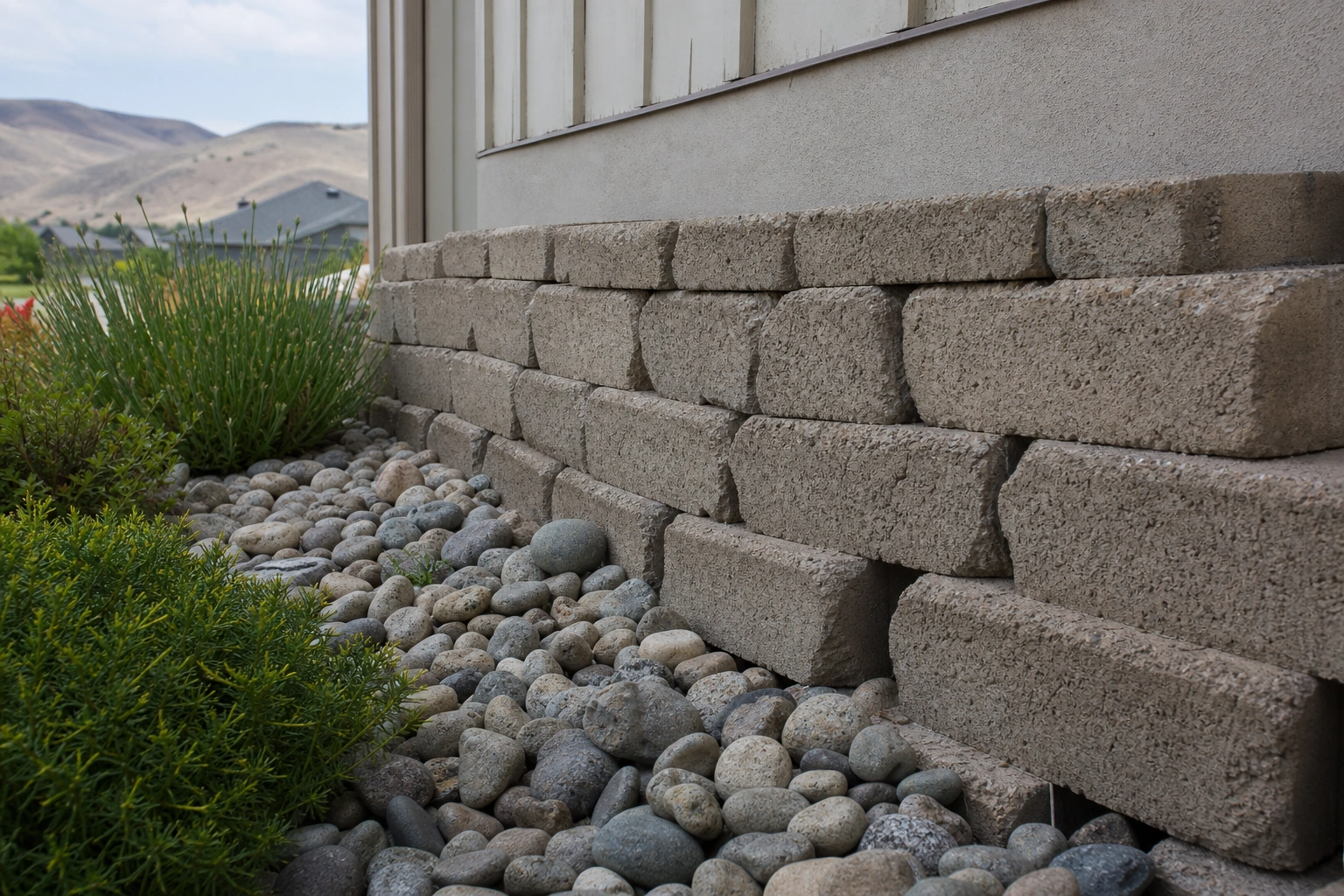
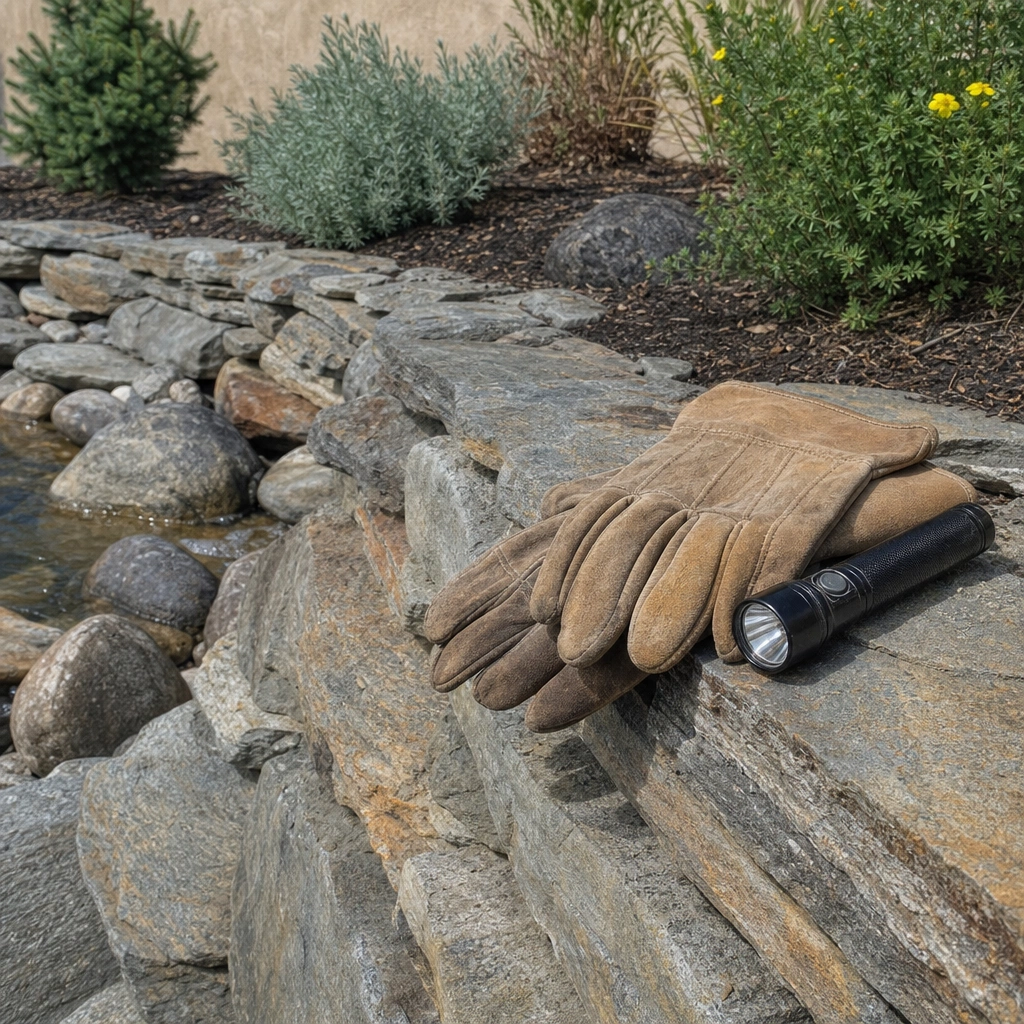
Western black widows live outdoors in dark, undisturbed voids close to the ground — rock walls, under landscape block, inside meter and valve boxes, under patio furniture, in garage corners and stored items. They bite only when pressed against skin, most often when someone reaches blindly into a void or puts on stored gloves or shoes. Wear gloves, use a flashlight, knock down webs, keep clutter off the ground, and get the exterior treated on a schedule.
The adult female is the one everyone pictures: glossy jet-black, roughly a half-inch body (about 1.5 inches across the legs), with a red hourglass on the underside of the abdomen. She hangs upside down in her web, which is how you usually see the marking.
Two things people miss:
The web is a giveaway on its own. It's not a tidy orb — it's a messy, three-dimensional tangle, and it's noticeably strong. If a web crackles and resists when you sweep it with a stick rather than tearing like silk, that's a widow web.
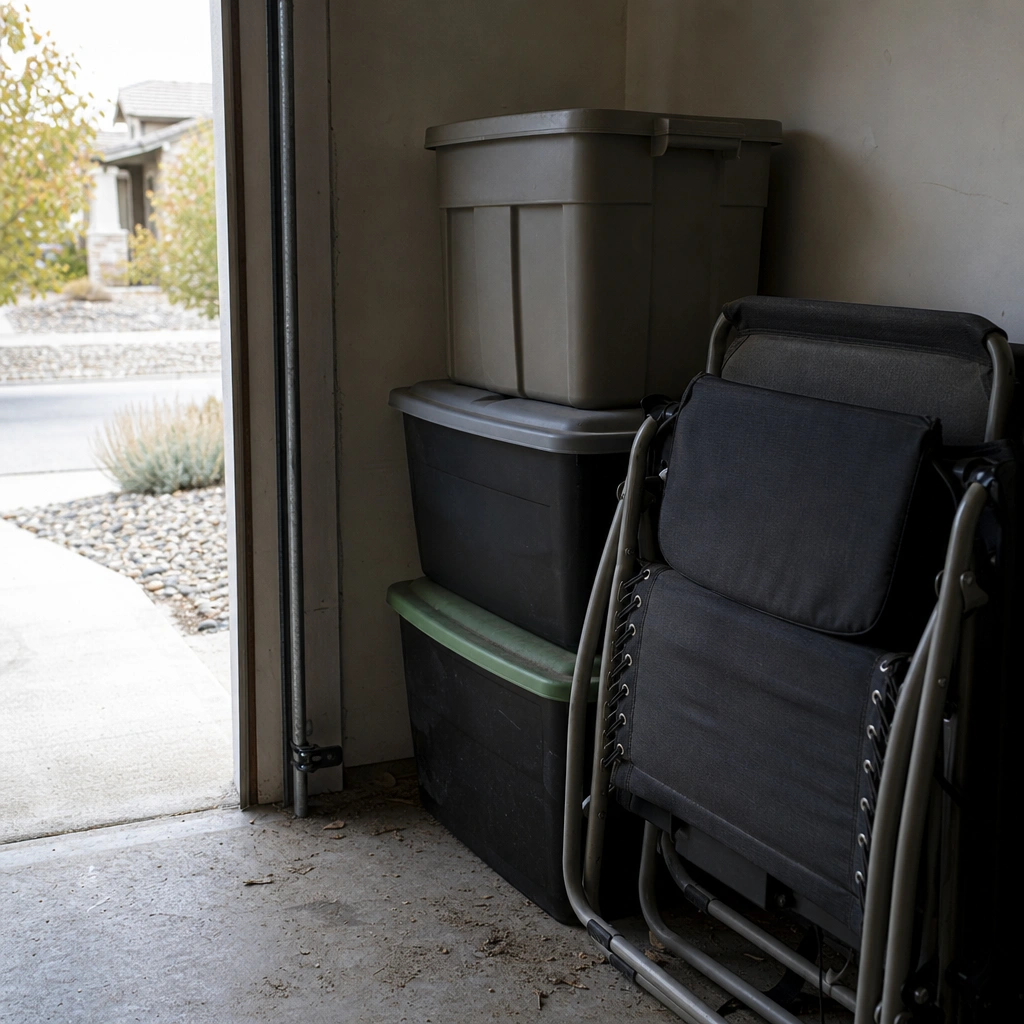
Almost never in the middle of a room, and almost never high up. Widows want a dark void, near the ground, undisturbed, with a bit of shelter from wind and sun. On a typical Tri-Cities property, that means:
If you want to find them, do it after dark with a flashlight — they're nocturnal and sit out on the web at night. During the day you'll mostly find the web and the papery egg sacs.
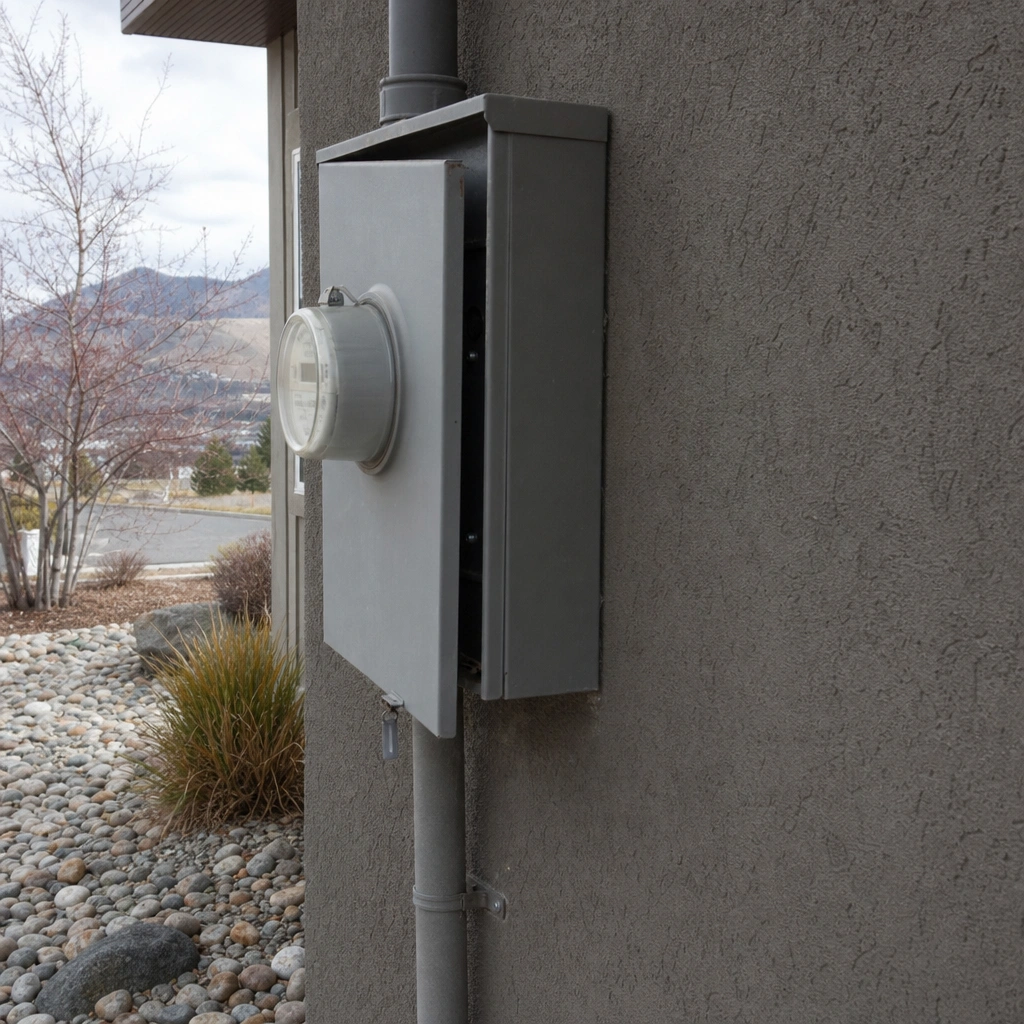
Warm, dry, low-humidity summers, plentiful ground-level voids, and a regional landscaping style built almost entirely out of rock and block. Add irrigation, which concentrates the insects widows eat right along the same foundation line, and you have close to perfect conditions. It's the same reason our pest pressure generally clusters at the boundary between watered ground and dry ground — the whole story is in Why Kennewick Homes Get Pests: 5 Local Causes.
Worth being accurate rather than either dismissive or alarming. Black widow venom is a neurotoxin, and a genuine bite is a medical matter — but bites are uncommon and fatalities in healthy adults are extremely rare.
What typically happens: a faint pinprick at the moment of the bite, then within 30–60 minutes, muscle cramping and pain that can spread to the abdomen, back and legs, sometimes with sweating, nausea and a rising heart rate. Two small puncture marks with local redness may be visible.
What to do: wash the area, apply a cold pack, and call the Poison Control line at 1-800-222-1222 — it's free, staffed 24/7, and they'll tell you whether you need to be seen. Go to an emergency room straight away if the person bitten is a young child, elderly, pregnant, or having severe cramping or difficulty breathing. If you can safely photograph or contain the spider, it helps with identification.
Almost all bites happen the same way: a hand into a void, or a spider trapped against skin inside a stored glove, boot or piece of clothing left in the garage.
We usually encourage people to do their own sealing and yard work — it's genuinely effective. Widows are the exception, for three reasons.
First, widow webs are defensive structures. Unlike a wandering spider that walks across treated surfaces and picks up product, a widow sits in her tangle web and rarely contacts a general perimeter spray at all. Getting a result means treating the void she's living in, directly, and knowing which voids those are.
Second, egg sacs. One female produces multiple papery, tan sacs holding hundreds of eggs each. Kill the adult and miss the sacs and you have the same problem in a few weeks. Finding and removing sacs is the actual work.
Third, the real fix is reducing what they eat. A perimeter that's dropping the general insect population is doing more for your spider problem than anything sprayed at a spider directly. That's a schedule, not a can.
Retail spider sprays are largely contact-kill: they work on the one you can see, and change nothing about the population in the wall of rock behind it. Washington State University's Hortsense guidance says much the same thing — habitat and exclusion first, chemistry as a supporting tool.
Concretely: a physical web and egg-sac sweep around the structure, targeted treatment into harbourage voids rather than a blanket spray of open surfaces, dust into rock walls, block voids and crawl spaces where appropriate, treatment of meter and valve boxes, and a full perimeter barrier to knock down the prey insects sustaining them. Then it repeats on a schedule, because widows recolonise good habitat — and your rock wall stays good habitat forever.
Spider work is part of the standard plan here rather than an upsell; there's no separate "spider package" on our pricing. Between visits, if they come back, so do we, at no charge.
If you've found webs in the rock wall, the meter box or the garage — or you have kids who play near either — call (509) 222-9828 or get a free quote. First visit as low as $149, plans from $59/month on a monthly, bi-monthly or quarterly schedule, free re-service between visits, and month-to-month with no contract if you'd prefer. We serve Kennewick, Pasco, Richland and West Richland.
For the rest of what's out there, see 7 Common Pests in Kennewick, WA: Complete Guide, and Pest-Proof Your Kennewick Home: 9 Simple Fall Fixes for the seasonal checklist.
Yes. They're well established across the Tri-Cities. Rock landscaping, landscape block, meter and valve boxes, and garages give them ideal harbourage, and our dry warm summers suit them.
Adult females are glossy black with a red hourglass — often two separate triangles — on the underside of the abdomen. Juveniles are striped cream, tan and orange and look nothing like the picture. The messy, unusually strong tangle web near ground level is a reliable clue on its own.
They're a genuine medical matter but rarely life-threatening in healthy adults. Expect cramping and pain that can spread within an hour. Wash the area, use a cold pack, and call Poison Control at 1-800-222-1222; go to an emergency room for children, elderly or pregnant people, or severe symptoms.
Occasionally, but they much prefer outdoor and garage voids near the ground. Most indoor encounters are in attached garages, crawl spaces and stored items rather than living areas.
Scheduled exterior service handles them well, because it combines web and egg-sac removal, targeted void treatment and a reduction in the prey insects that keep them there. A single spray of open surfaces usually doesn't, since widows rarely contact it.
Populations peak from mid-summer into early autumn, when females are largest and egg sacs are present. That said, they overwinter in sheltered voids here, so garages and rock walls can produce them year-round.
Pest Guides
The most common explanation for fall spiders is also wrong, and it leads people to the wrong fix. Here's what's actually happening in September and October, and what changes it.
7 min read
Seasonal Invaders
They don't bite, don't breed indoors and don't damage anything — and they're still the number one fall complaint here. The problem is that by the time you see them, the useful window has closed.
7 min read
Seasonal Invaders
The shield-shaped ones on your window in October aren't native, they're an invasive orchard pest — and the reason they end up in your bedroom has nothing to do with your housekeeping.
6 min read