Seven inches of rain a year and still ants in the kitchen. The answer is irrigation, farmland, alkaline soil and two very different housing stocks — none of which a national pest site can tell you.
· 6 min read
Newcomers ask it every summer: we get seven or eight inches of rain a year, summer afternoons run past 100°F, and the hills are bare sagebrush — so why are there ants in the kitchen? Understanding why Kennewick homes get pests is genuinely different from anywhere else, and it's the difference between treating the symptom and fixing the cause.
The short answer to why Kennewick homes get pests
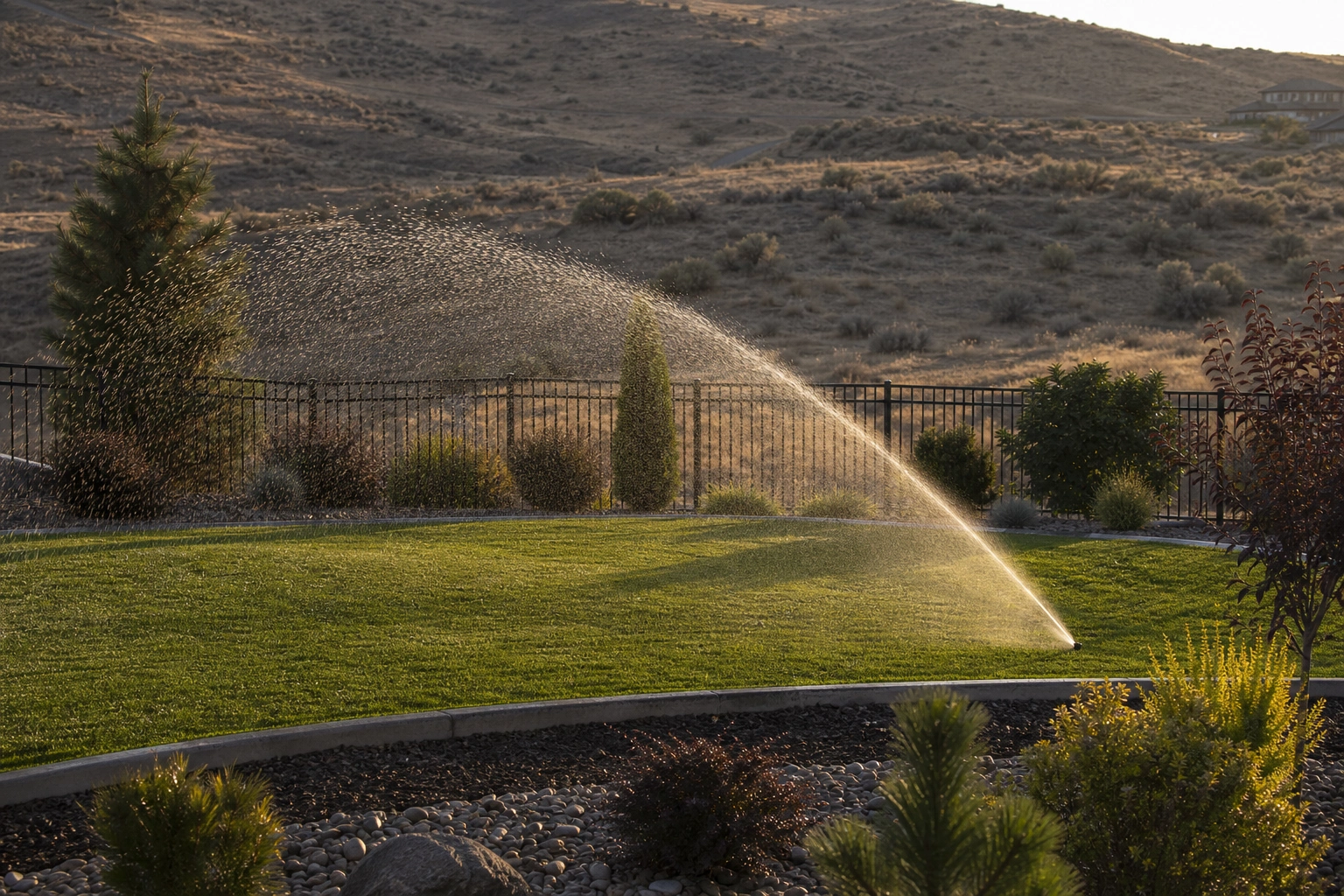
We built a green, irrigated suburb inside a desert, ringed by irrigated farmland. Every lawn is an artificial oasis, and the sharp edge where watered ground meets dry native ground is almost always your foundation. That single fact drives most pest pressure in the Tri-Cities — and harvest, alkaline soil, our housing stock and extreme summer heat explain the rest.
1. Irrigation in a desert concentrates everything
This is the big one. In wetter climates, moisture is everywhere and insects spread out. Here it's scarce, so anything that needs water concentrates hard wherever water exists — and in a residential neighbourhood, that's your lawn, your flower beds, your drip lines and the damp shade at your foundation.
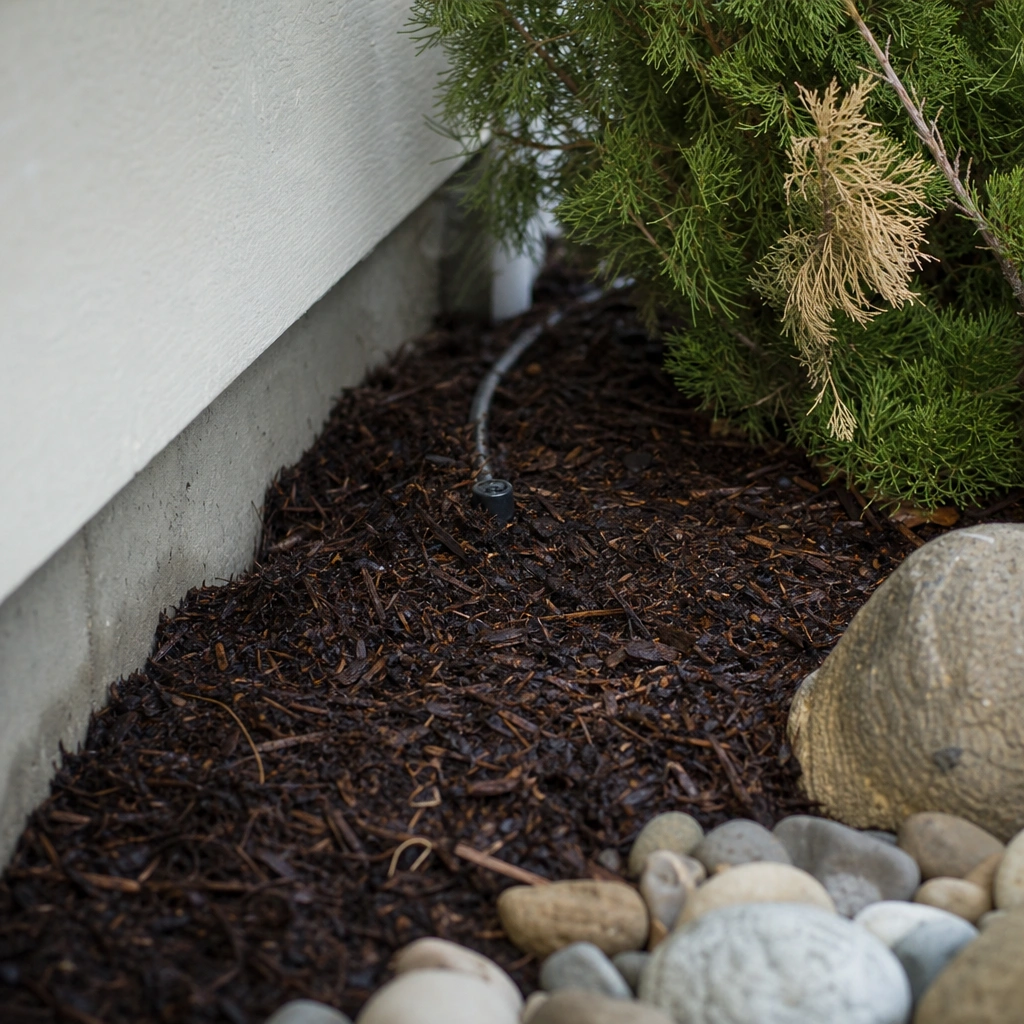
Ants, earwigs, crickets, spiders and the insects spiders eat all pile up along that boundary. It's why a sprinkler head aimed at your siding will out-produce any treatment we apply, and why turning it is the highest-return free thing a Tri-Cities homeowner can do.
2. Summer heat drives pests indoors for water
This one surprises people constantly. In July and August, our classic ant call isn't the pantry — it's the dishwasher, the sink base cabinet, the bathroom, the water heater closet. When outdoor moisture disappears in extreme heat, ants come inside hunting water, not food.
The practical consequence: an immaculate home gets ants just as readily as a messy one. If you've cleaned obsessively and still have them, you don't have a hygiene problem — you have the only reliable water source for a hundred yards.
3. Harvest evicts an enormous rodent population every autumn
Tri-Cities homes don't get mice because it turns cold. They get mice because the field next door got harvested.
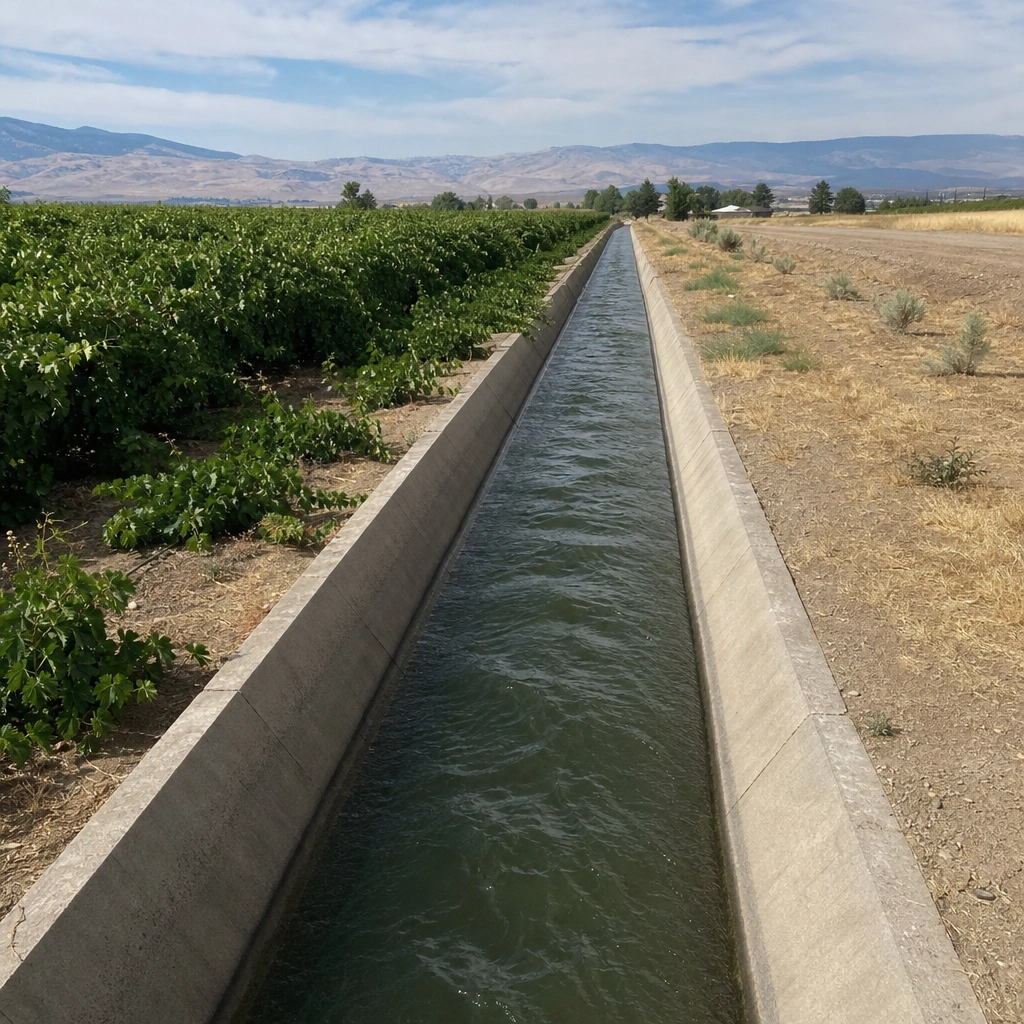
From late September through November, alfalfa, corn and potato ground comes off across the Columbia Basin and canal laterals go dry for the season. Hundreds of acres of shelter and food disappear within a couple of weeks, and the population that lived there moves — toward structures. Homes on the agricultural edge see the first and heaviest wave. Full detail in Rodent Control in Kennewick: 8 Simple Warning Signs.
4. Our soil and landscaping are perfect for the worst nesters
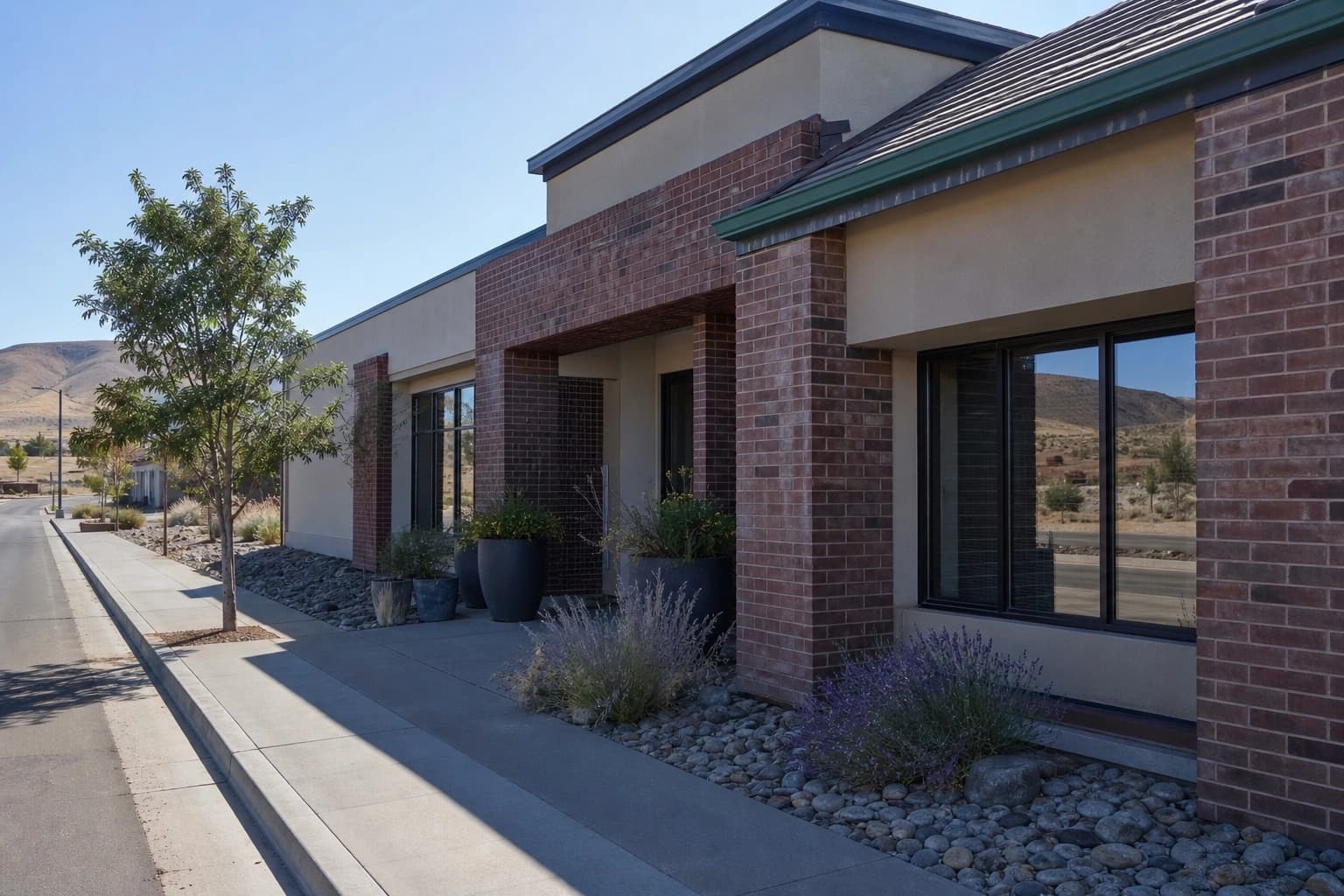
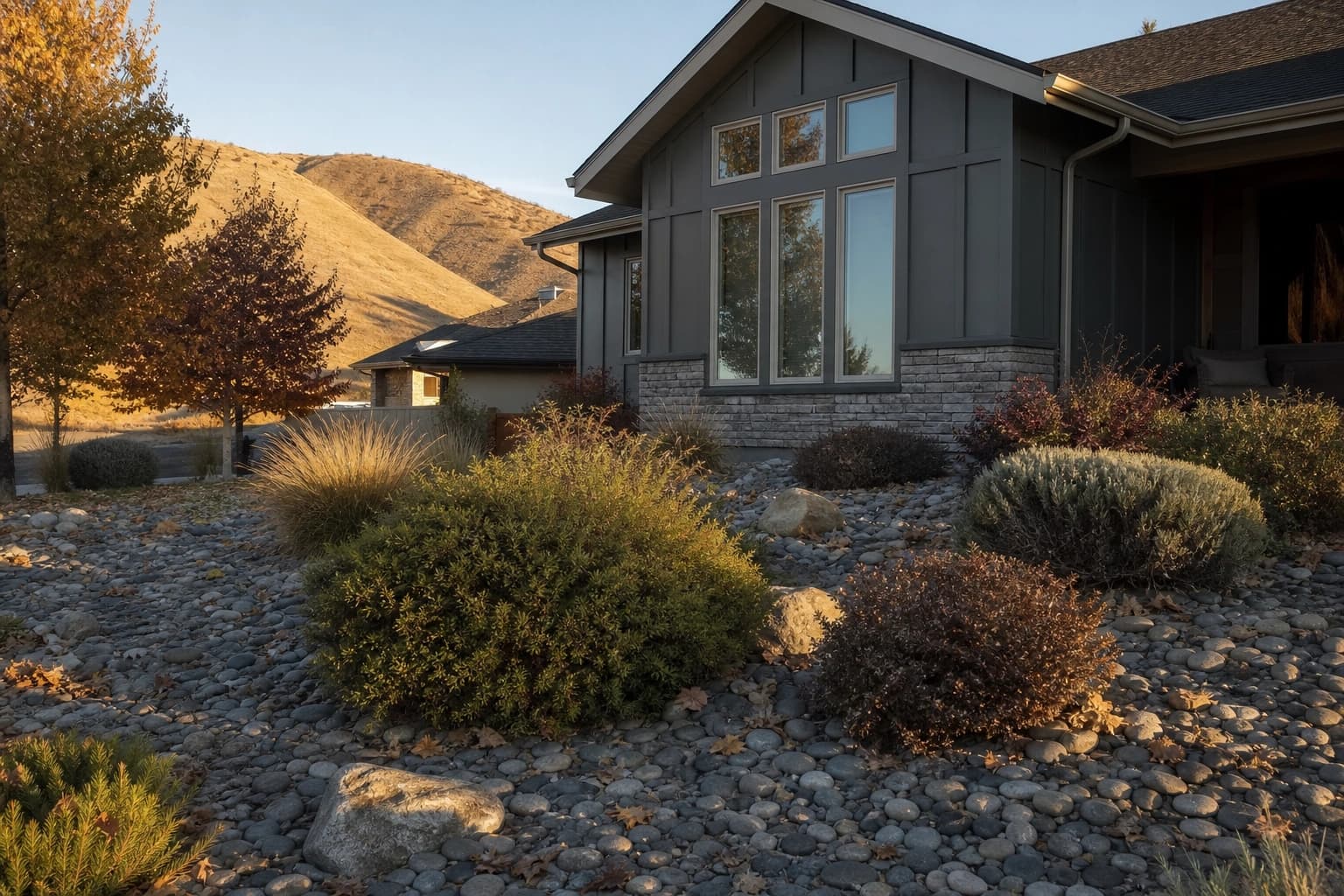
Dry, well-drained, alkaline soil with plenty of voids is close to ideal for ground-nesting yellowjackets — and the decorative river rock over landscape fabric on nearly every newer street is even better. Add abandoned rodent burrows, gaps under concrete steps and patios, stacked landscape block and irrigation valve boxes, and you have a landscape purpose-built for the two pests people most want to avoid: ground yellowjackets and black widows.
That's also why black widows are genuinely common here rather than a scare story. Rock walls, meter boxes, landscape block and garages are exactly their preferred harbourage, and we have all four in quantity.
5. Two housing stocks with opposite problems
The Tri-Cities has an unusual split, and which one you own changes your pest profile:
New construction on former farmland — Southridge, Badger Mountain South, the Road 68 and Broadmoor corridors. The ant and rodent populations that lived on that ground didn't leave when the houses arrived; they adapted. And new homes settle in their first few years, opening hairline gaps at the sill plate and around window frames.
Older stock — Richland's Hanford-era alphabet houses, mid-century central Kennewick. Crawl spaces, original wood trim, foundation vents with long-gone screens, and decades of settling. More entry points, but usually more stable, predictable populations.
Why Kennewick homes get pests, season by season
Because the causes are environmental, the calendar is remarkably consistent year to year. This is roughly what a Tri-Cities year looks like:
March–April. Ground warms, overwintering insects become active, and the first ant trails appear. Yellowjacket queens are out alone looking for nest sites — the cheapest moment of the entire year to prevent a summer nest.
May–June. Ant activity climbs hard. Wasp nests reach golf-ball size under eaves, where almost nobody looks. Spiders start building.
July–August. Peak heat. Ants move indoors hunting water, black widows reach full size, wasp colonies get large, and earwigs and crickets pile into anything damp.
Late September–November. Harvest. Fields come off, canal laterals go dry, and rodents move toward structures en masse. Boxelder bugs and stink bugs mass on warm south and west walls looking to overwinter.
December–February. Quiet outside, which is exactly when indoor rodent activity gets noticed — in the pantry, the garage, the crawl space. Spiders carry on in garages all winter.
The useful implication: nearly every pest problem here is preventable at a specific point about two months before it becomes visible. Wasps are stopped in April, not August. Rodents are stopped in August, not November.
What this means for how you treat
Two conclusions follow from the causes, and they're the reason our service looks the way it does.
Exterior work carries most of the result. If the pressure is arriving from outside — following irrigation to your foundation — then the foundation is where it should be stopped. That's why interior treatment is optional on our plan and plenty of customers never take it. Treating inside a house while the wall line is untreated is mopping the floor with the tap running.
Timing beats intensity. A treatment applied a month before a seasonal wave outperforms a stronger treatment applied a month after it. Same product, same price, completely different outcome — which is the actual argument for scheduled service over calling someone once things get bad.
What actually changes the outcome
Because the causes are structural and environmental, the fixes are too. In rough order of return:
Turn sprinklers off the siding and foundation.
Pull mulch and rock back so a few inches of foundation shows.
Seal the garage door corners, utility penetrations and vent screens.
Trim vegetation off the walls and roof.
Treat the exterior perimeter on a schedule, so the barrier is standing when each seasonal wave arrives.
The first four are free and permanent. The fifth is what a plan is actually for — and it's why quarterly service works so well here despite the desert climate: the pests change with the season, but they never stop arriving, because the conditions creating them never stop either.
Washington State University's Hortsense publishes guidance specific to our growing region if you want to go deeper — it's free and not selling anything.
Getting ahead of it
If you'd like the perimeter handled properly and the entry points found by someone who does it daily, call (509) 222-9828 or get a free quote. First visit as low as $149, plans from $59/month with monthly, bi-monthly or quarterly treatments, free re-service between visits, month-to-month available.
Because your neighbourhood isn't a desert anymore. Irrigated lawns, flower beds and drip lines create concentrated moisture in dry country, and pests pile up at the boundary — which is your foundation.
Why do ants come inside when my house is spotless?
In July and August they're hunting water, not food. That's why they turn up under sinks, near dishwashers and in bathrooms of immaculate homes during our hottest weeks.
Do new homes have fewer pests than old ones?
Not necessarily — just different ones. New builds on former farmland inherit established populations and develop settlement gaps; older homes have crawl spaces and aging vent screens. Both need attention, in different places.
Are black widows really common in Kennewick?
Yes. Our rock landscaping, landscape block, meter boxes and garages are ideal harbourage. They're not aggressive, but they're established throughout the area.
Does pest control even work in this climate?
It works well, because the pressure is predictable and comes from identifiable places. Exterior perimeter treatment on a schedule, plus fixing irrigation and sealing entry points, handles most Tri-Cities homes.
Every company says they're licensed, thorough and guaranteed. Here are the nine questions that actually tell them apart — and the three answers that should end the call.
A failed health inspection costs more than a year of service. What commercial pest work covers by property type, how often it's needed, and what the documentation is really for.
September is the deadline, not the starting gun. Here's the checklist that keeps the autumn rodent wave outside, and the two jobs worth handing to a professional.