Pest Guides
Black Widow Spiders in Kennewick: 7 Things to Know
They're genuinely established here — in rock walls, meter boxes and garages. Here's how to identify one, where they live on your property, and what to do about it.
7 min read
Pest Guides
The most common explanation for fall spiders is also wrong, and it leads people to the wrong fix. Here's what's actually happening in September and October, and what changes it.
7 min read
Every September the same thing happens. You go to the garage and there's a big one on the floor that wasn't there yesterday. Something fast crosses the hallway at 10pm. There's a web across the front door every single morning no matter how many times you knock it down. The usual explanation for spiders in fall is that they're coming inside to escape the cold — and that explanation is mostly wrong, which matters, because it points you at the wrong solution.
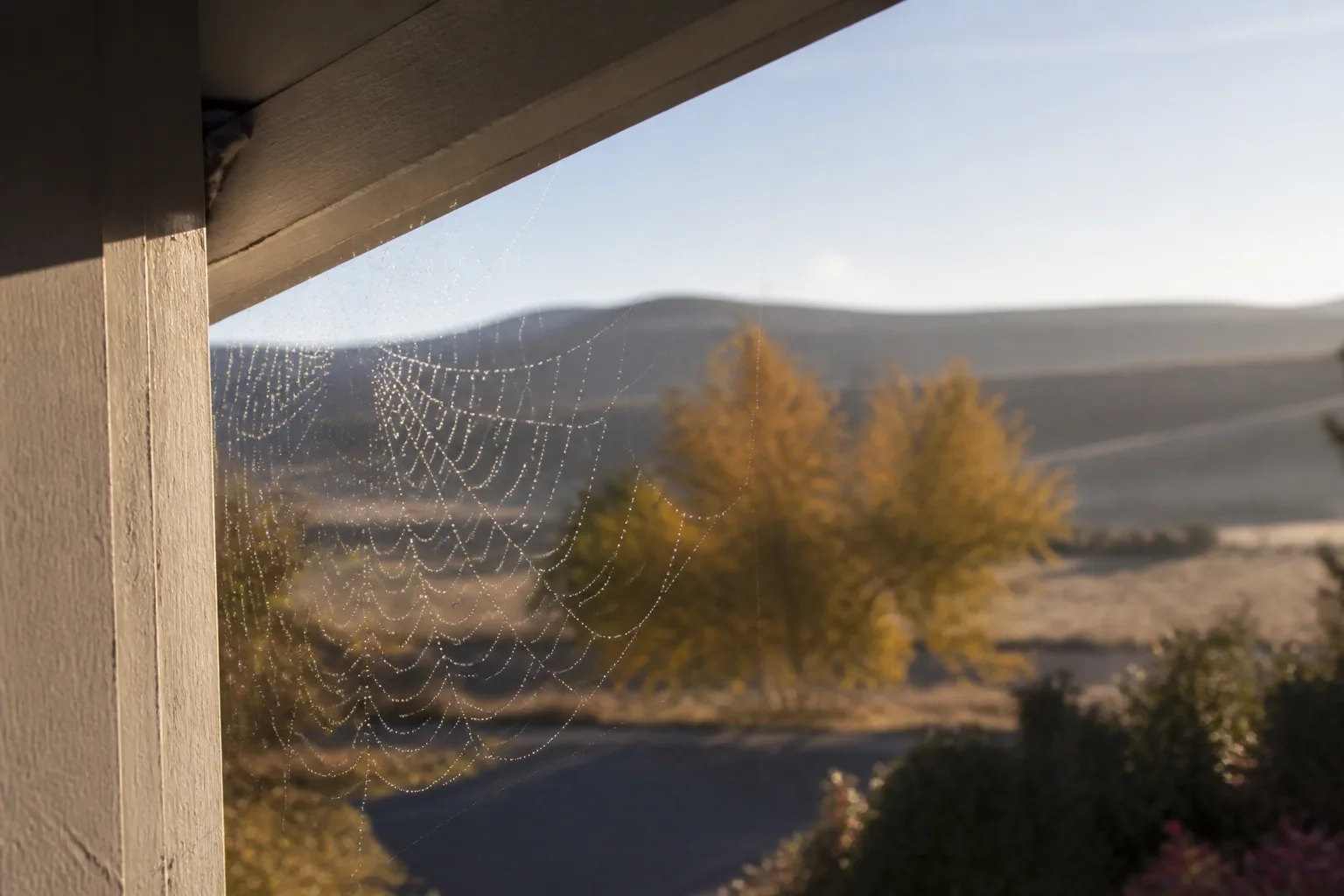
Fall spiders aren't fleeing the weather. It's mating season: mature males abandon their webs and wander looking for females, which is why you suddenly see large spiders moving in the open. Most of the ones you find indoors have lived indoors their whole lives. What actually reduces them is cutting off their food supply — the insects at your walls and lights — plus de-webbing and a treated perimeter.
House spiders are not out in the yard deciding it's chilly. The species you find inside — cellar spiders, common house spiders, giant house spiders — largely live indoors year round, in the garage, the crawl space, the corners of the ceiling, behind boxes. They were there in July. You just weren't seeing them, because they were sitting still in a web.
What changes in late summer is that they reach maturity. Males stop maintaining webs and start walking, sometimes considerable distances, looking for a mate. A wandering spider in the middle of the floor at night is doing that. It's the same population, suddenly visible and moving.
Two consequences follow, and both are practical:
Some of it isn't a myth. Two things do push spiders toward the structure in fall in the Tri-Cities:
Their prey moves to your walls. September and October are when boxelder bugs, stink bugs, crickets, earwigs and moths mass on sunlit walls and around exterior lights. Spiders follow food. A porch light running all night is a nightly insect buffet, and the webs above the door are there because that's where dinner is.
Yard habitat gets disturbed. Irrigation shuts off for the season, landscaping dries down, mulch and leaf litter are cleaned up. Ground-hunting spiders — wolf spiders especially — lose cover and shift toward the foundation and into the garage.
So the movement is real, it just isn't about temperature. It's about food and cover.
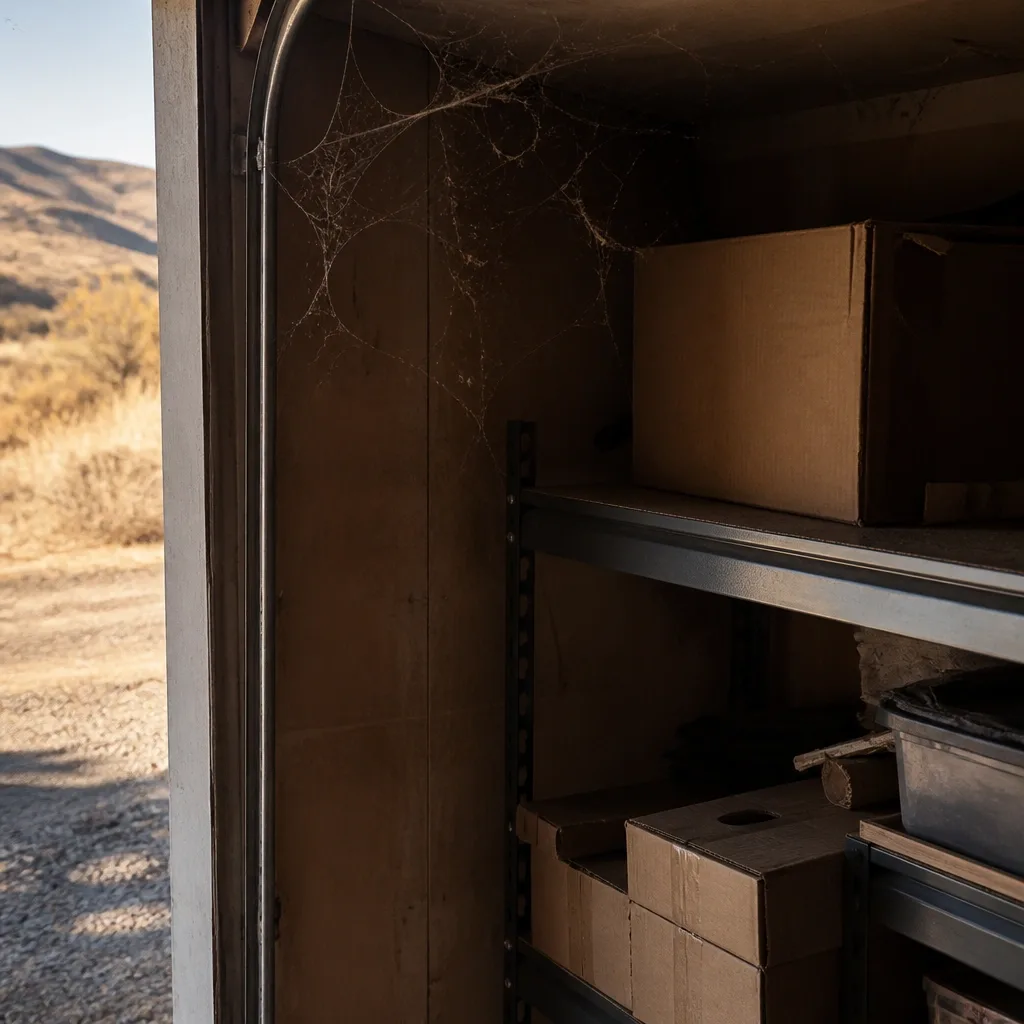
Western black widow. The one that matters. Common across eastern Washington and comfortable in exactly the dry, warm, undisturbed places our homes provide — garages, window wells, under the lip of the block wall, in the gap behind stacked pots, inside a stored bucket, under patio furniture that hasn't moved all summer. Glossy black, with the red hourglass on the underside of the abdomen. She's not aggressive and she doesn't chase anything, but her venom is medically significant and this is a spider worth taking seriously. Wear gloves when you reach into stored things in fall.
Hobo spider. Common in the Pacific Northwest and the source of a lot of outdated internet fear. Hobo spiders were listed for years as causing necrotic wounds; that link has not held up under later review, and the CDC removed the hobo spider from its list of venomous spiders of concern in 2017. They're fast, they build funnel webs low down in garages and basements, and mature males wander in exactly this season. Not a spider to panic about.
Giant house spider. Big, long-legged, alarming, harmless. This is usually the one sprinting across the floor in October.
Wolf spiders. Ground hunters, no web, hairy, sometimes carrying an egg sac or spiderlings on the back. They come in at ground level — under the garage door, through the crawl space vent. Harmless.
Cellar spiders. The very thin, very long-legged ones in ceiling corners and crawl spaces, hanging in a messy web. Completely harmless, and they eat other spiders.
In order of how much difference it makes.
This is the one that changes the population rather than the count on any given night. Spiders concentrate where insects concentrate. Reduce the insects at your walls and lights and the spider numbers follow, with a lag of a few weeks.
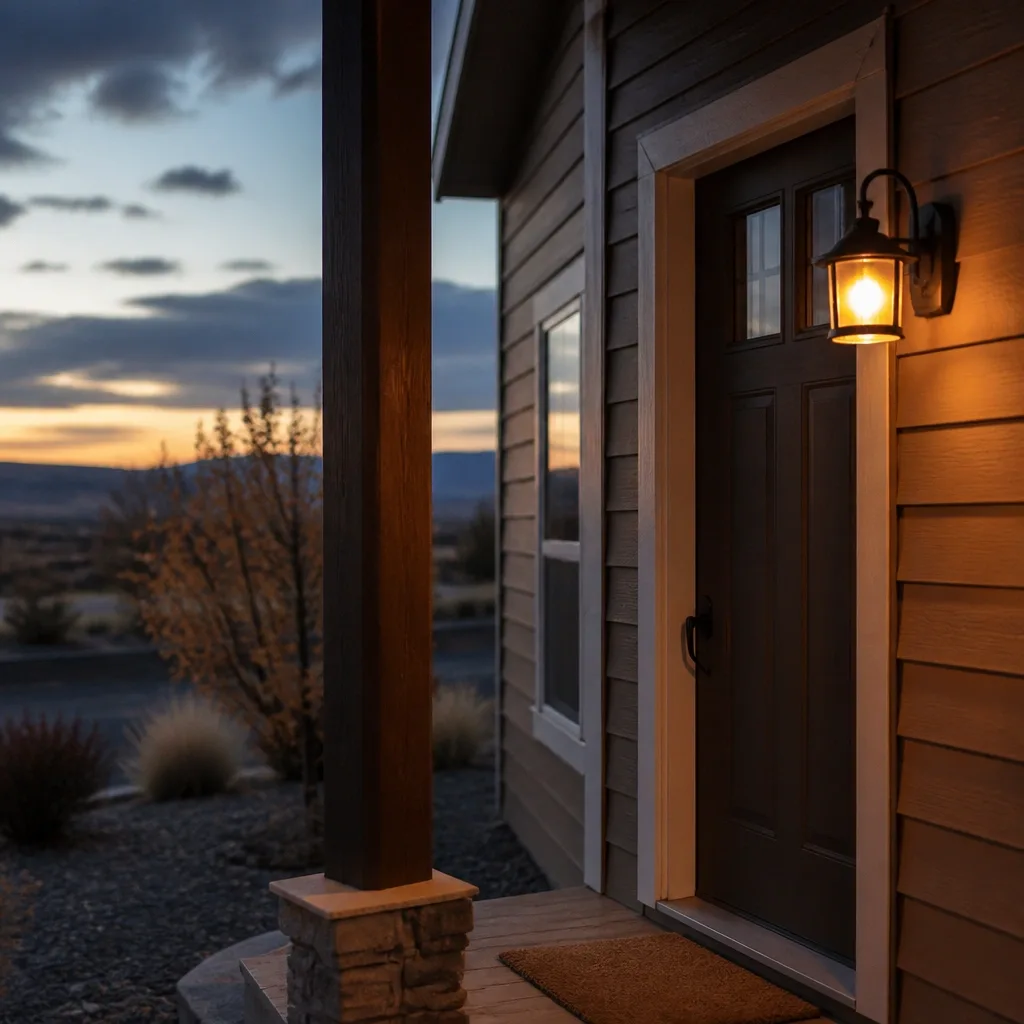
The single easiest change: swap exterior bulbs for warm-toned or amber LEDs, and stop leaving the porch light on all night. Bright white and blue-toned light pulls insects from a long way off. Warm light pulls far fewer.
Physically knocking down webs around eaves, soffits, door frames, window frames and the patio does more than people assume. It removes egg sacs, it makes the site unproductive, and it forces the spider to spend energy rebuilding somewhere that keeps getting cleared. A pole duster once a week through September and October is genuinely effective.
Pull mulch and rock back from the wall. Move the woodpile off the ground and away from the house. Get stored boxes off the garage floor and onto shelves. Black widows in particular need undisturbed cover — remove the cover, remove the spider.
An exterior application to the foundation line, eaves, window and door surrounds and the garage does two jobs at once: it hits spiders directly on contact with treated surfaces, and it suppresses the insects they're eating. Combined with de-webbing, it's what keeps a front entry clear instead of clear-for-two-days.
Underrated for this exact season. Flat glue boards placed along walls, behind the toilet, under the bed, in garage corners — where a walking spider actually travels — catch the wandering males that are the main thing you're noticing. Cheap, no chemicals, and they double as a monitoring tool.
Most fall spiders are a tolerance problem. Two situations aren't:
Fall is when spider pressure peaks here, and it's the same visit that handles the boxelder bugs, stink bugs and crickets arriving in the same weeks. De-webbing and a full exterior barrier are part of every visit on our plan. Call (509) 222-9828 or get a free quote — first visit $149 instead of $249, plans from $59/month, and free re-service if anything comes back between visits.
Related reading: Black Widow Spiders in Kennewick: 7 Things to Know and Boxelder Bugs in the Tri-Cities.
It's mating season. Mature males leave their webs and wander looking for females, so large spiders that were always there become visible and mobile. Their prey insects also mass at walls and lights in fall, which concentrates spiders near the house.
Mostly no. The house spiders you find indoors generally live indoors year round. What changes is their behaviour, not their location.
Cut the insects they eat — switch exterior lights to warm-toned bulbs and stop leaving them on all night — then de-web weekly and treat the perimeter. Sticky traps along walls catch the wandering ones.
The old claim that hobo spider bites cause necrotic wounds has not held up, and the CDC removed the hobo spider from its list of venomous spiders of concern in 2017. Black widows are the spider here that genuinely warrants caution.
No. Both have been tested and neither reduces spider numbers. Removing food, webs and harborage does.
Because the porch light is drawing insects there every night, so it's a productive spot worth rebuilding in. Change the bulb to a warm tone or turn it off, keep de-webbing, and the site stops being worth the effort.
Pest Guides
They're genuinely established here — in rock walls, meter boxes and garages. Here's how to identify one, where they live on your property, and what to do about it.
7 min read
Seasonal Invaders
They don't bite, don't breed indoors and don't damage anything — and they're still the number one fall complaint here. The problem is that by the time you see them, the useful window has closed.
7 min read
Seasonal Invaders
The shield-shaped ones on your window in October aren't native, they're an invasive orchard pest — and the reason they end up in your bedroom has nothing to do with your housekeeping.
6 min read