Our wasp calls don't peak in July like the national articles say — they peak in late August. Here's the local calendar, and why treating in June costs a fraction of treating in September.
· 8 min read
Almost everything written about wasp control in Kennewick is written for somewhere else. National pest sites tell you wasps peak in July. Here, our phone doesn't really start ringing until the second half of August — and the first week of September is reliably the worst week of the year.
The short answer
Wasp activity in the Tri-Cities peaks from mid-August through late September, not midsummer. A nest treated in June is small, cheap and low-risk; the same nest in September holds thousands of insects and is far more defensive. If you can see a nest right now and it's July, deal with it this month — you'll pay less and get stung less.
Why our wasp season runs late
A yellowjacket colony starts in spring with one queen. All summer it grows quietly, and through June and July the workers are hunting protein — caterpillars, spiders, flies — to feed larvae. They're around, but they're busy and they largely ignore you.
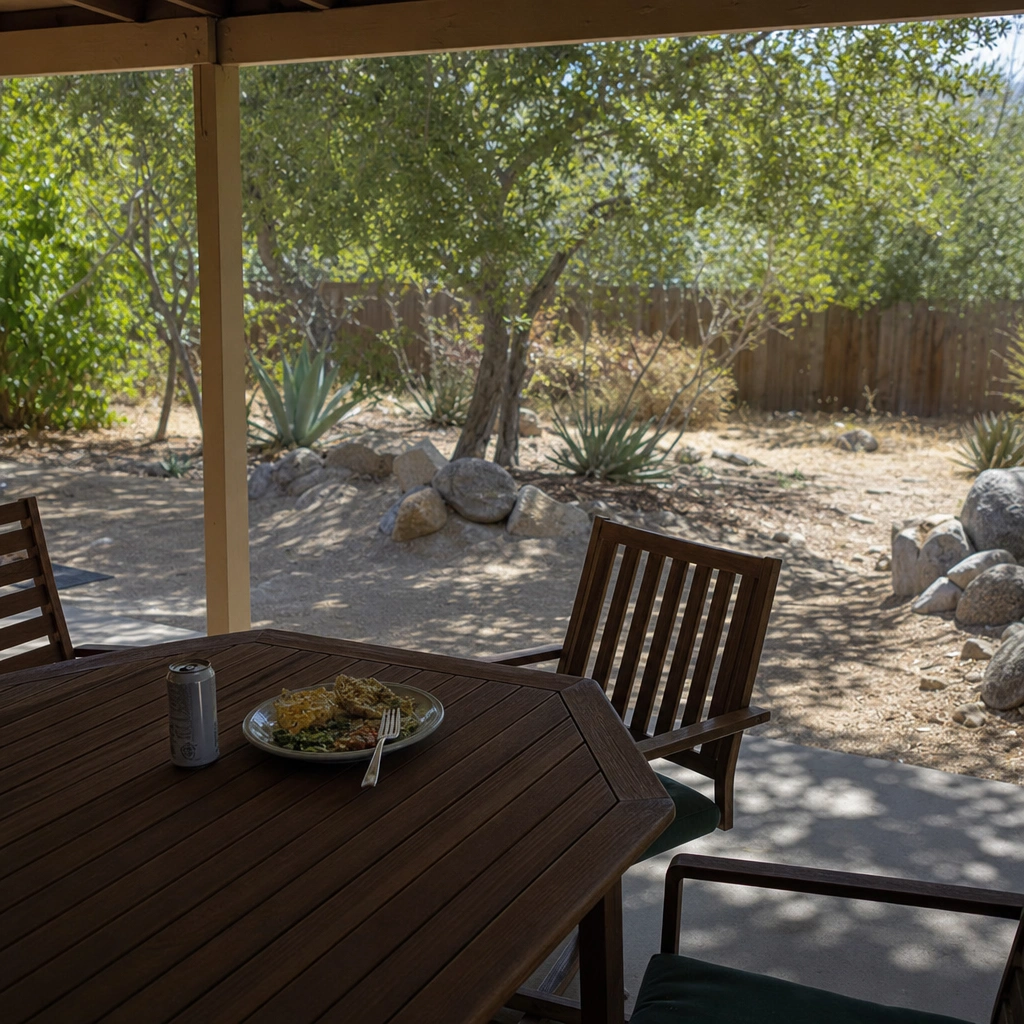
In late summer the queen stops laying worker eggs. There are suddenly no larvae to feed, and the larvae were the colony's sugar supply. Thousands of workers with nothing to do switch to hunting sugar, and that is the moment they discover your soda, your hummingbird feeder, your garbage can and your barbecue.
So the thing people experience as "the wasps got aggressive" isn't aggression. It's a colony at maximum size with its food source removed, three weeks before it dies.
The Tri-Cities makes this worse
Late summer here is also harvest. We're surrounded by orchards, vineyards and backyard fruit trees, and Red Mountain crush season lands right in the middle of the sugar-hunting window. Fallen fruit under a tree in a Richland or West Richland backyard is a wasp magnet more powerful than anything on your patio table.
Six timing rules for wasp control in Kennewick
April–May: look, don't treat. Queens are scouting nest sites. Knocking down a golf-ball-sized starter nest under an eave with a hose takes ten seconds and prevents the whole problem.
June: the cheap window. Nests are small and colonies are calm. This is the single best month to handle a known nest.
July: still manageable. Colonies are growing fast but still protein-focused. Most people don't notice them yet, which is exactly why July calls are rare and July treatments are easy.
Mid-August to mid-September: peak. Maximum colony size plus the sugar switch. This is when nearly everyone calls, and when nests are most dangerous to disturb.
Late September–October: declining, but don't relax. Colonies are dying, but ground nests near a doorway are still worth treating rather than waiting out.
After the first hard freeze: done. The colony dies. Old nests are never reused, so an empty paper nest under your eave in December is a curiosity, not a problem — remove it whenever you like.
Know which one you have
Three insects get called "wasps" here and they behave completely differently.
What it is
Nest
Temperament
Paper wasp
Open umbrella of cells under eaves, in patio furniture, inside grills
Mild. Stings if you crowd the nest. Genuinely beneficial in a garden.
Yellowjacket
Hidden — underground, in rock walls, inside wall voids and landscape lighting boxes
Defensive and stings repeatedly. The one that ruins picnics.
Bald-faced hornet
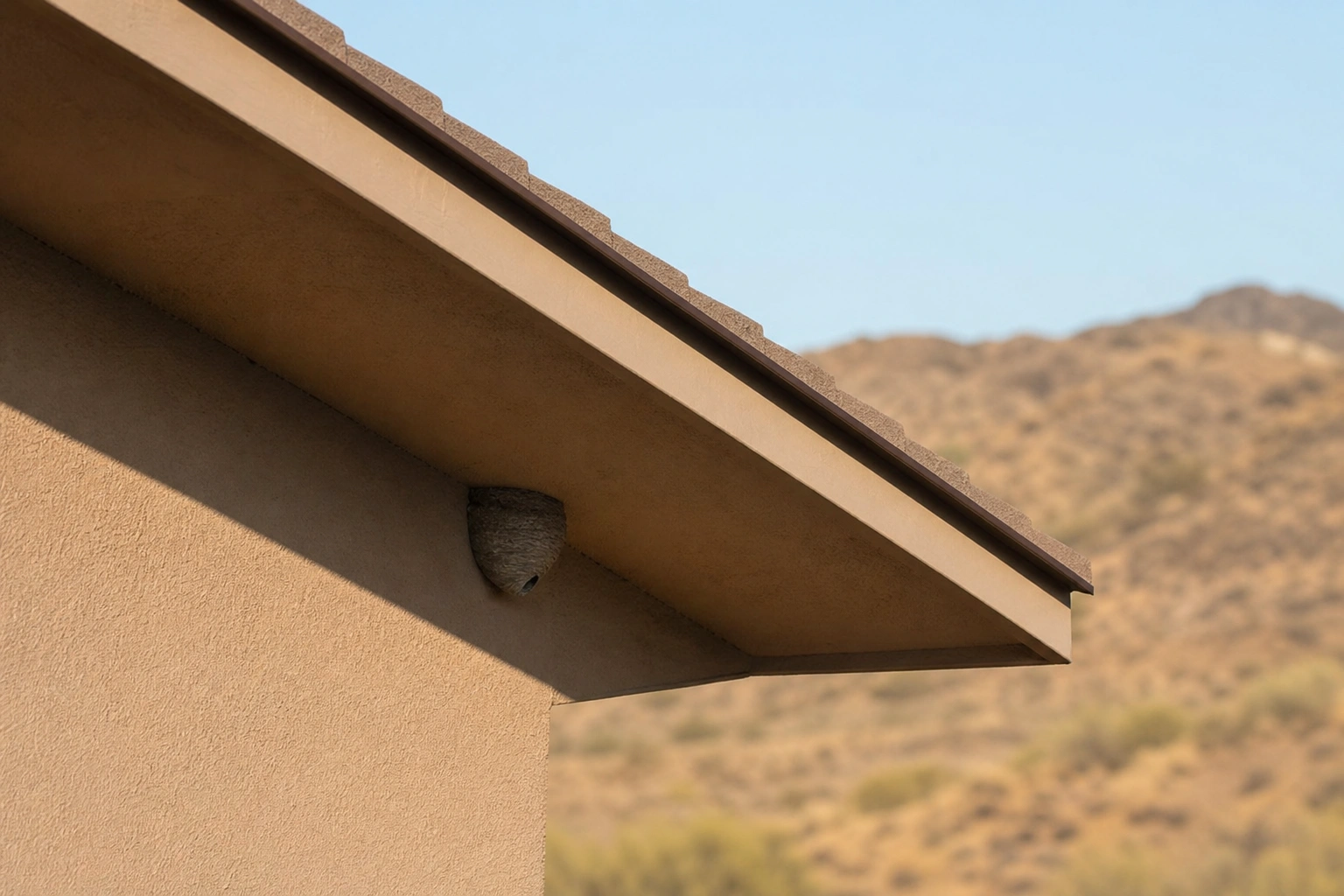
Grey papery football hanging in a tree or on a wall
Very defensive within about ten feet of the nest.
The distinction matters because a paper wasp nest on a shed you never use is arguably better left alone — they hunt garden pests all summer and die in autumn. A ground yellowjacket nest beside your front walk is the opposite: it's a hazard, and lawnmower vibration will set it off from several feet away.
The ground-nest problem here specifically
Yellowjackets prefer dry, well-drained soil and pre-existing cavities — abandoned rodent burrows, voids under rock landscaping, gaps beneath concrete. That describes an enormous share of Kennewick, Pasco and West Richland yards. Decorative river rock over landscape fabric, which is on nearly every newer street in Southridge and along Road 68, is close to ideal yellowjacket habitat.
If you're seeing steady traffic in and out of one spot in the ground, that's a nest, and it may hold thousands of insects with no visible structure at all.
The wasp control in Kennewick you can safely do yourself
We'd rather you handle the easy ones.
Starter nests in spring. A nest smaller than a golf ball with one or two wasps on it — knock it down in the early morning when it's cold and they're sluggish.
Exposed paper wasp nests within reach, treated at dusk when the whole colony is home and inactive. Aerosol jet sprays are designed for exactly this.
Removing what attracts them. Lidded garbage cans, picked-up fallen fruit, covered recycling, cleaned grills, and hummingbird feeders moved away from where people sit.
What genuinely warrants a call
Ground nests. They boil out, they pursue, and you can't retreat quickly enough.
Anything inside a wall or soffit. Do not seal the entrance — trapped wasps chew inward and end up inside your living space.
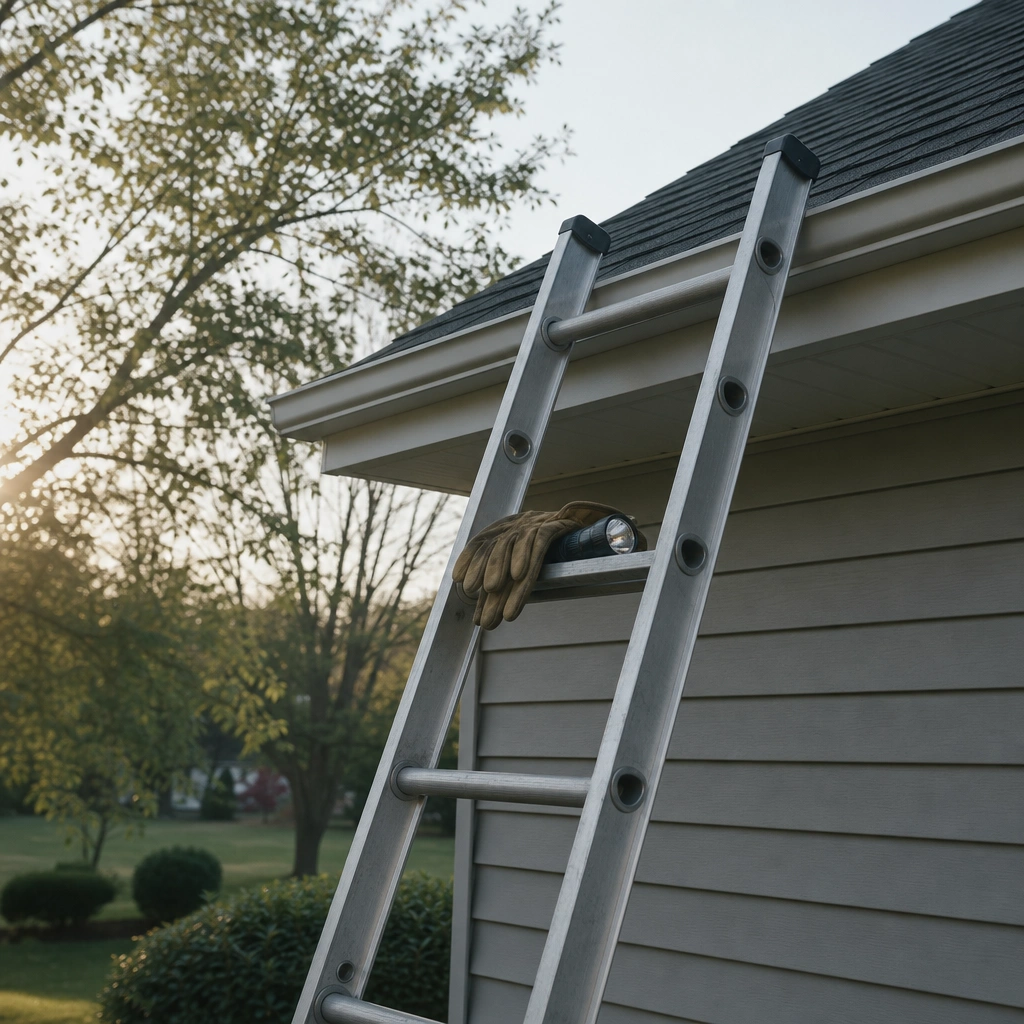
Anything needing a ladder. Being stung on a ladder is how a wasp problem becomes a hospital visit.
Bald-faced hornet nests anywhere near where people walk.
Anyone in the home with a sting allergy. Not worth the gamble at any nest size.
The Washington State Department of Health publishes clear guidance on bees and wasps, and WSU's Hortsense covers our region specifically.
Prevention that actually works
Most wasp prevention advice is useless. These three aren't, and together they're the whole of preventive wasp control in Kennewick.
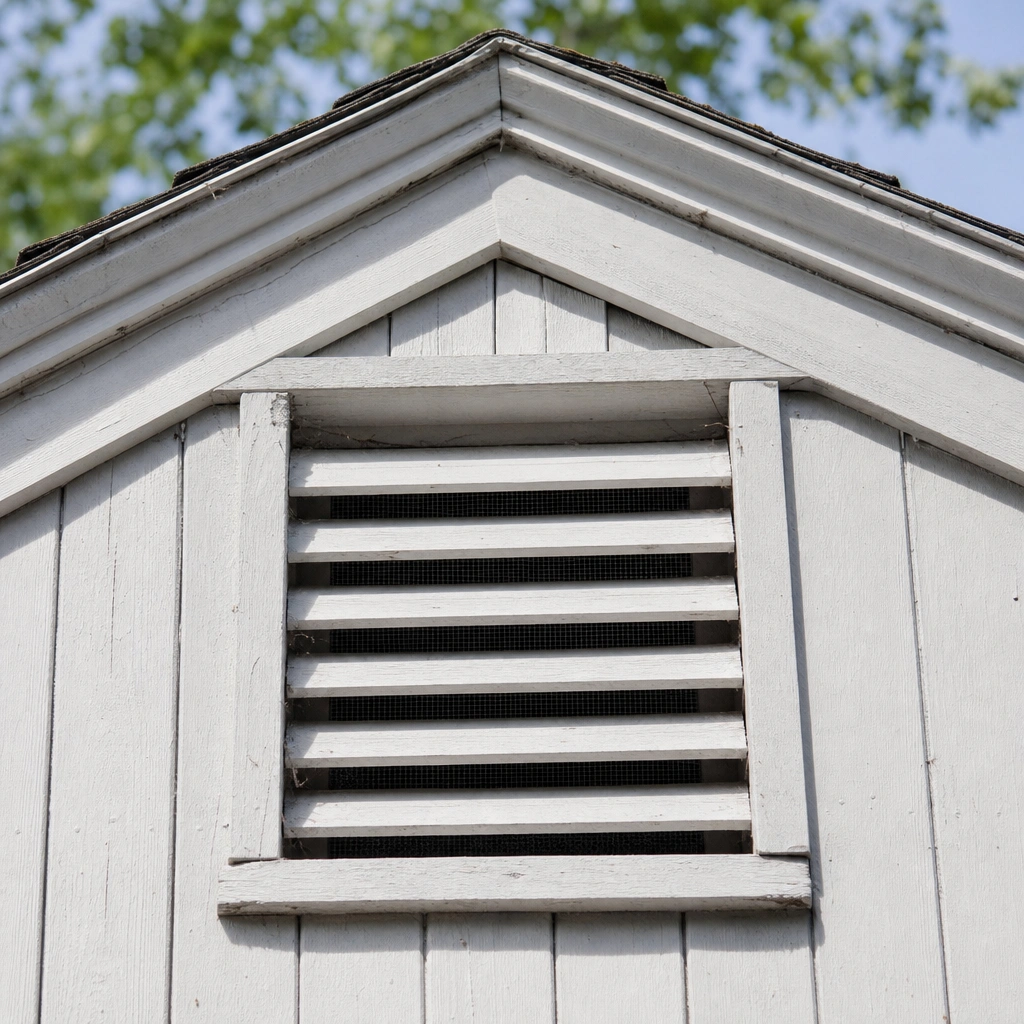
Screen your attic and gable vents. Fine metal mesh behind the louvres. Wall and attic nests are the expensive ones, and this stops them before they start.
Do a five-minute eave walk in early May. Look under every eave, the grill lid, the patio umbrella, the play structure, the mailbox. Starter nests are trivially easy to remove in May and a real job in August.
Deal with fallen fruit. If you have a plum, apricot or apple tree, picking up windfall twice a week from August onward will do more than any spray.
What doesn't work: those decoy paper "nests" sold as deterrents, and most hanging traps — traps catch foragers from nests you'll never find while doing nothing to the colony. Fake nests have no meaningful effect on where a queen chooses to build.
What a wasp service involves
Professional wasp control in Kennewick is quick for an accessible nest — usually under 30 minutes, treating the nest directly and leaving residual product at the entrance so returning foragers carry it in. Ground nests get treated at the opening. Wall voids get treated through the entry point and are deliberately left open for a week or two so survivors exit rather than chew inward.
Wasps are covered on the Home Pest Protection Plan, which includes eave and web sweeps at every visit — and knocking down starter nests four times a year is precisely how you never have an August wasp problem. If you'd rather handle it once, a one-time treatment averages $249 — get a free quote or call (509) 222-9828.
A single accessible nest — paper wasps under an eave, a hornet nest on a wall — is a one-time treatment averaging $249. Ground nests and wall voids sit at the same price but take longer, because the treatment has to reach a cavity you can't see into.
On the Home Pest Protection Plan ($149 first visit, then $59–109 a month by home size) wasps are covered as part of the standard service: every quarterly visit includes an eave and soffit sweep, which knocks starter nests down before they become colonies. That's the actual mechanism by which people stop having wasp problems — not a stronger product, just someone removing golf-ball nests in May and June that nobody was going to notice.
Where the ground nests are worst
Yellowjacket ground nests concentrate in dry, well-drained soil with existing cavities. Across the Tri-Cities that means a few predictable places: decorative rock beds over landscape fabric, the gap under concrete steps and patios, retaining walls of stacked block, irrigation and valve boxes, and the disturbed ground along fence lines backing onto undeveloped lots. Newer developments with heavy rock landscaping — much of Southridge, the streets off Road 68 — generate a disproportionate share of these calls.
The tell is traffic. Wasps entering and leaving one point in the ground or a wall at a steady rate, especially in the same flight line, is a nest regardless of whether you can see structure.
If someone gets stung
Yellowjackets can sting repeatedly, and unlike a bee they don't leave the stinger behind. Normal reaction is pain, redness and swelling for a day or two — cold compress and an antihistamine. What needs immediate emergency care is any sign of a systemic reaction: difficulty breathing, swelling of the face or throat, dizziness, or hives spreading away from the sting site. If anyone in the household has a known sting allergy, don't approach a nest at all, at any size.
Frequently asked questions
When are wasps worst in the Tri-Cities?
Mid-August through late September, peaking around the first week of September. Colonies are at maximum size and have switched from hunting protein to hunting sugar, which is when they start bothering people.
Do wasps come back to the same nest next year?
No. The colony dies at the first hard freeze and the nest is never reused. Queens do favour the same sheltered locations, though, so a spot that had a nest this year is a good place to check next May.
Should I plug the hole where wasps are getting into my wall?
No — that's the one mistake that turns an outdoor problem into an indoor one. Blocked wasps chew through drywall into the room. Treat first, seal weeks later.
Are wasp traps worth it?
Marginally. They catch foragers but don't affect the colony, and a badly placed trap draws more wasps into your yard. Removing food sources beats trapping every time.
How much does wasp removal cost in Kennewick?
A one-time treatment averages $249. On the Home Pest Protection Plan — $149 first visit, then $59–109 a month — eave sweeps and nest knockdown are included at every visit, along with free re-service if wasps come back between visits.
Are paper wasps worth killing?
Often not. If the nest is somewhere nobody goes, paper wasps hunt garden caterpillars all summer and die off in autumn. Yellowjackets near a walkway are a different matter.
They don't bite, don't breed indoors and don't damage anything — and they're still the number one fall complaint here. The problem is that by the time you see them, the useful window has closed.
The shield-shaped ones on your window in October aren't native, they're an invasive orchard pest — and the reason they end up in your bedroom has nothing to do with your housekeeping.
The most common explanation for fall spiders is also wrong, and it leads people to the wrong fix. Here's what's actually happening in September and October, and what changes it.