The question that stops most people from booking. Here's what's actually applied around your home, the real re-entry times, and why a professional visit is usually safer than the can under your sink.
· 7 min read
"Is pest control safe for pets and kids?" is the single most common question we get before someone books — and it deserves a real answer rather than a brochure line. Here's exactly what happens at your house, what's applied, and how long to keep everyone off it.
The short answer
Yes, when it's applied properly. Modern professional products are applied in targeted, low-concentration amounts to places pets and children don't spend time — the exterior foundation, cracks, voids and eaves — and interior spots are dry and safe within a couple of hours. The riskiest pest control in most homes isn't the professional visit; it's the untrained over-application of a hardware-store can indoors.
Is pest control safe for pets? Six facts
1. Most of the work is outside
On a typical Tri-Cities service, the majority of what we apply goes around the exterior foundation, under eaves and into entry points — not across the floors your toddler crawls on. Interior work is targeted at cracks, crevices, plumbing penetrations and the backs of cabinets: exactly the places pests travel and people don't.
2. "Dry means safe" is the rule that matters
The re-entry guidance for the products used in home service is straightforward: stay off treated surfaces until they've dried, typically 1–2 hours for interior work. Once dry, there's no meaningful transfer risk. That's the whole waiting period for most families — one nap or one trip to the park.
3. Baits and dusts stay where pests are, not where kids are
A lot of the most effective work isn't spray at all. Ant gel goes in pinhead-sized dots inside cabinet voids. Crawl-space dust goes under the house. Rodent bait goes in locked, tamper-resistant stations that require a key to open — that's their entire design purpose, and it's why they're safe alongside a curious dog.
4. Fish, birds and reptiles need one extra step
These are the genuine sensitivities. Aquariums should be covered and the pump switched off during interior treatment, and birds and reptiles are best moved to another room or outside the treatment area until surfaces dry. Tell us before the visit and the technician plans around it — this is routine, not a problem.
5. DIY is where most household exposure actually happens
Retail sprays are sold with the implication that more is better, and people fog rooms, soak baseboards, and treat surfaces where children eat. Professional application is the opposite: measured amounts, specific placements, and a licensed applicator who knows what the label legally requires. The EPA's Citizen's Guide to Pest Control and Pesticide Safety is blunt about this — misuse of consumer products is a bigger household risk than professional service.
6. Untreated pests carry their own risk
It's worth weighing both sides honestly. Around here that means black widows in the garage and rock walls where kids play, yellowjacket nests near doorways, and deer mice, which in eastern Washington can carry hantavirus. Leaving those alone isn't the neutral option it feels like.
What's actually being applied at your house
"Chemicals" is a word that does a lot of unhelpful work. In practice a residential visit here uses four different kinds of thing, and they carry very different exposure profiles:
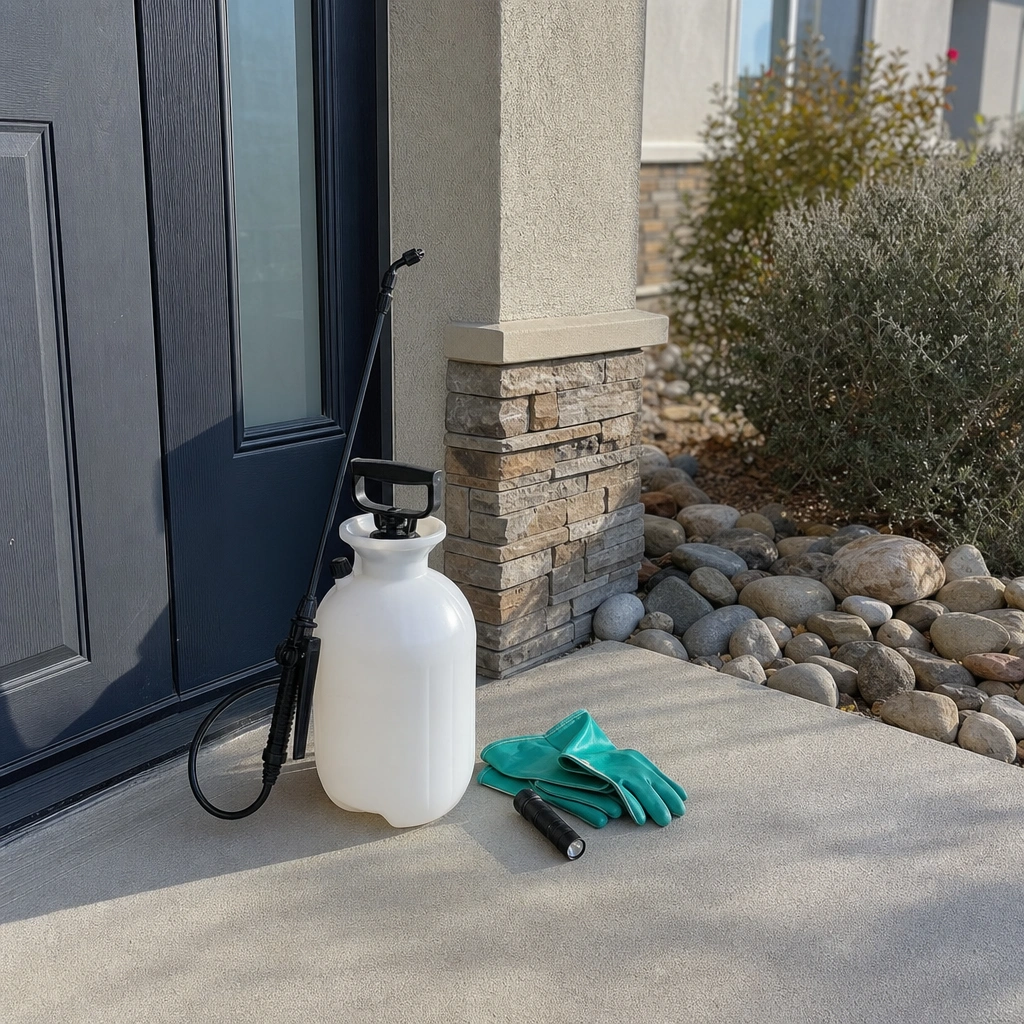
Liquid perimeter residual. A dilute product applied as a band along the exterior foundation, under eaves and into entry points. It's the backbone of the service and almost all of it is outside, at ground level, on surfaces nobody touches.
Gel bait. Pinhead dots placed inside cabinet voids, hinge gaps and cracks. Ants carry it back and share it through the colony — which is why bait beats spraying, and why almost none of it sits anywhere reachable.
Dust. A dry material puffed into wall voids, crawl spaces, weep holes and rock-wall gaps. It stays in the void; that's the entire point of using it.
Rodent bait in locked stations. Anchored, tamper-resistant boxes that need a key. They exist specifically so that a determined dog, a curious toddler or a raccoon can't reach the contents.
Notice how little of that is "spray the areas where you live." Modern service is deliberately built to put small amounts of material in places pests travel and people don't, and the shift toward baits and dusts over the last twenty years happened largely for that reason.
The 24 hours after a visit
Here's the realistic timeline, so nobody spends the evening worrying:
0–2 hours. Interior treated spots are drying. Keep pets and kids off those specific surfaces. Exterior work is usually fine to walk past almost immediately, and the technician will say so if anything on your visit is different.
2–24 hours. Normal life. Vacuum, cook, let the dog out. Don't mop treated baseboards or wash the exterior foundation band — that removes the product you paid for, which is the only real reason to wait.
Days 1–10. You'll see more insect activity, not less, as products push pests out of harborage and bait moves through colonies. It's the most common reason people worry, and it's the treatment working.
One genuinely useful habit: don't sweep up dead insects for a few days. It's tempting, but they're the evidence that the treatment is doing its job, and they're worth pointing out at the next visit.
What to tell your technician — before they start
This is the part homeowners often skip, and it's the part that matters most. Tell us:
Every pet in the home, including the aquarium, the bird, the reptile and the one that lives in the garage.
Anyone pregnant, elderly, immune-compromised, asthmatic or chemically sensitive.
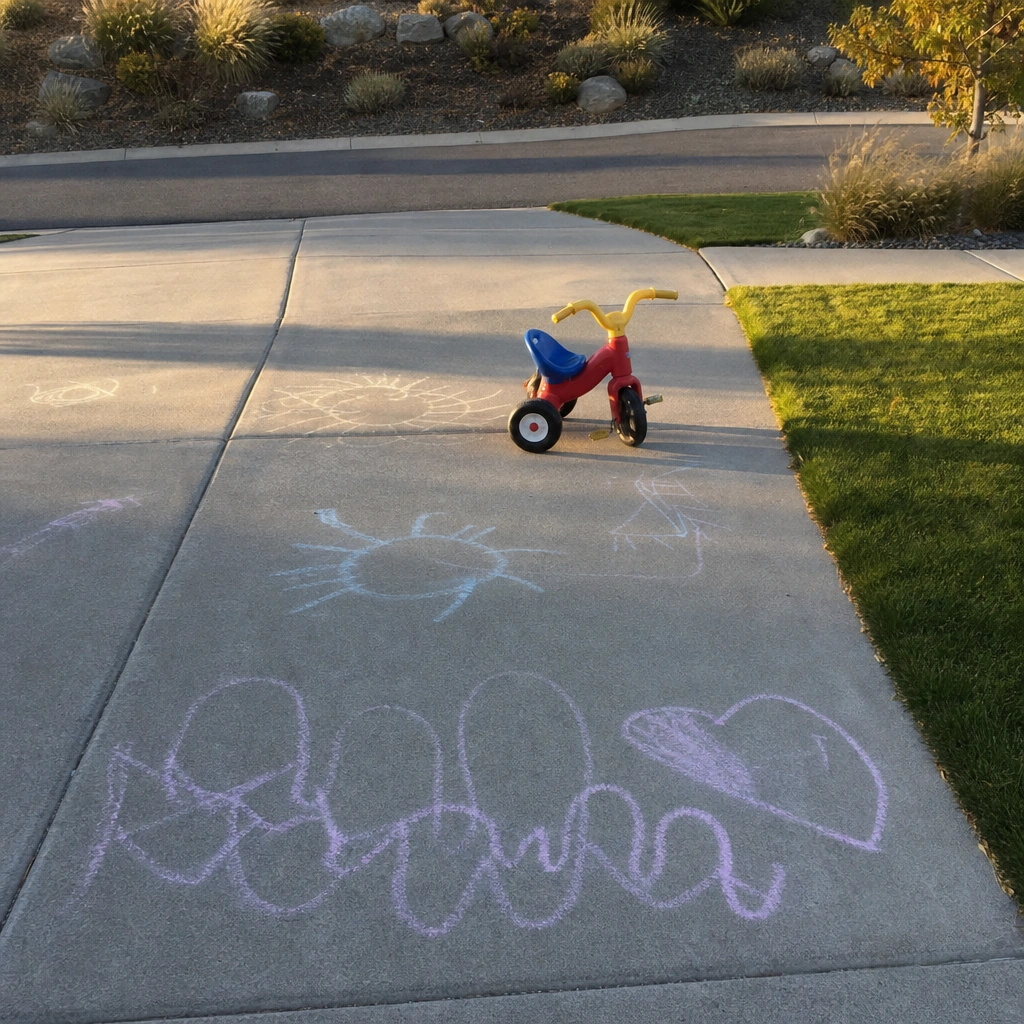
Where kids play — the sandbox, the swing set, the patch of lawn they're always on.
Any areas you'd rather we skip entirely. Interior treatment is optional on our plan; plenty of customers take exterior-only and get excellent results.
Washington requires commercial applicators to be licensed through the Washington State Department of Agriculture, and you can ask to see that licence. You can also ask for the product label or safety data sheet for anything applied at your home — a good company hands it over without hesitating.
A prep checklist that keeps pest control safe for pets
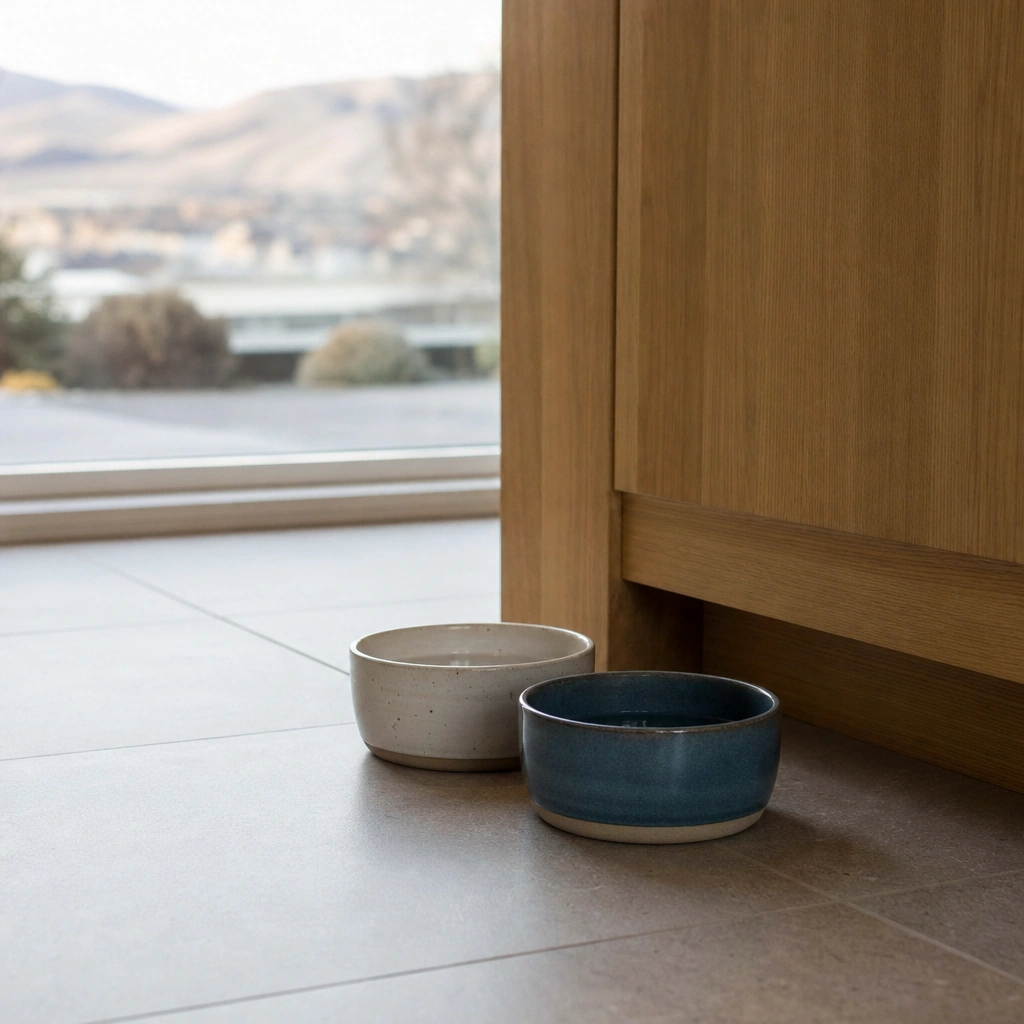
Pick up pet bowls, toys and chew items from areas being treated.
Cover the aquarium and switch off its air pump.
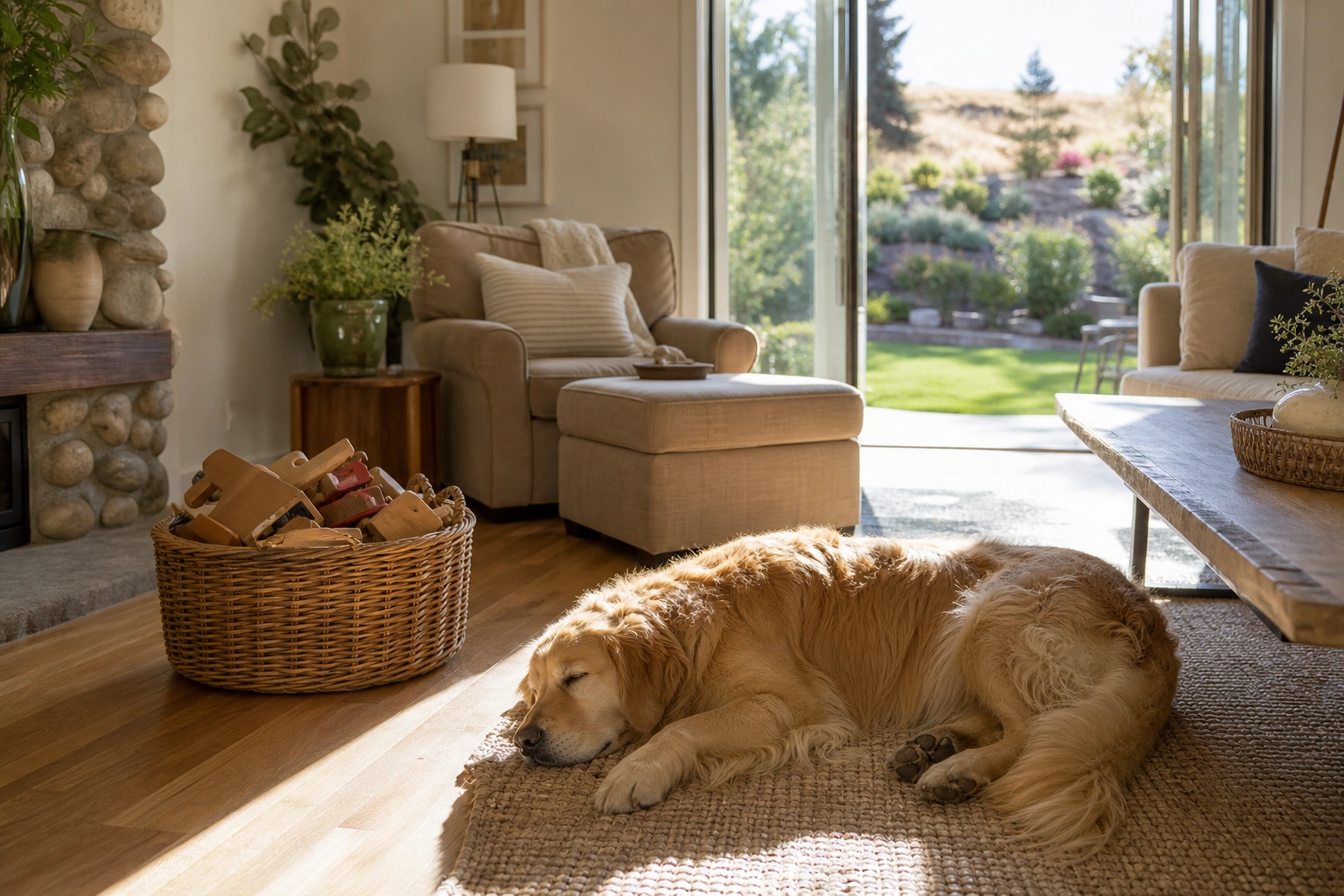
Put dogs and cats in one untreated room, or take them out for the visit.
Clear the perimeter — move the trampoline, sandbox toys and patio cushions a few feet off the foundation line.
Plan to keep everyone off interior treated surfaces until dry, about 1–2 hours.
Ask what was used, and where. Keep the answer with your house records.
Exterior-only is a real option
If you'd simply rather nothing is applied inside your home, say so. A full exterior perimeter barrier, eave and web sweep, and entry-point work handles the large majority of what drives Tri-Cities pest pressure — because the pests are coming from outside, following irrigation and landscaping to your foundation. We'd rather serve you exterior-only than have you skip service and end up spraying a can under the sink yourself.
Getting it done properly
The safest pest control is the kind applied in the right amount, in the right place, by someone licensed to do it — which is exactly the argument for having it done rather than attempting it. Call (509) 222-9828 and tell us about your household, or get a free quote. We serve Kennewick, Pasco, Richland and West Richland, and every plan includes free re-service between visits.
Until treated surfaces are dry — typically 1 to 2 hours for interior work. Exterior perimeter treatment usually doesn't require keeping pets off the yard at all, though we'll tell you if anything on your visit does.
Is pest control safe for pets like cats and dogs?
Yes, when applied correctly and allowed to dry. Cats are somewhat more sensitive than dogs because of grooming behaviour, which is another reason to keep them out of treated rooms until surfaces are dry rather than merely "mostly dry."
What about fish, birds and reptiles?
These need the extra care. Cover aquariums and turn off the pump; move birds and reptiles out of the treatment area until it's dry. Always tell your technician before they start.
Can I skip the interior treatment?
Absolutely — interior treatment is optional on our plan. Exterior perimeter work handles most Tri-Cities pest pressure on its own, since the pressure originates outside.
Are the products safe around vegetable gardens?
Point out the garden and the technician will keep applications away from it. We treat the structure and foundation, not your produce.
Is professional pest control safer than doing it myself?
Generally yes. Professionals apply measured amounts in targeted locations under a legally binding product label; the common DIY failure is over-application indoors, in exactly the living spaces you're trying to protect.
Every company says they're licensed, thorough and guaranteed. Here are the nine questions that actually tell them apart — and the three answers that should end the call.
A failed health inspection costs more than a year of service. What commercial pest work covers by property type, how often it's needed, and what the documentation is really for.
September is the deadline, not the starting gun. Here's the checklist that keeps the autumn rodent wave outside, and the two jobs worth handing to a professional.