Your First Pest Control Visit in Kennewick: 7 Steps
No surprises: the arrival window, the walk-around, what gets treated inside and out, how long it takes, and why you'll still see a few bugs afterward.
· 7 min read
Booking a service you've never used is uncomfortable when you don't know what's about to happen in your house. So here's the whole thing: your first pest control visit in Kennewick, start to finish, including the parts nobody mentions until you ask.
The short answer
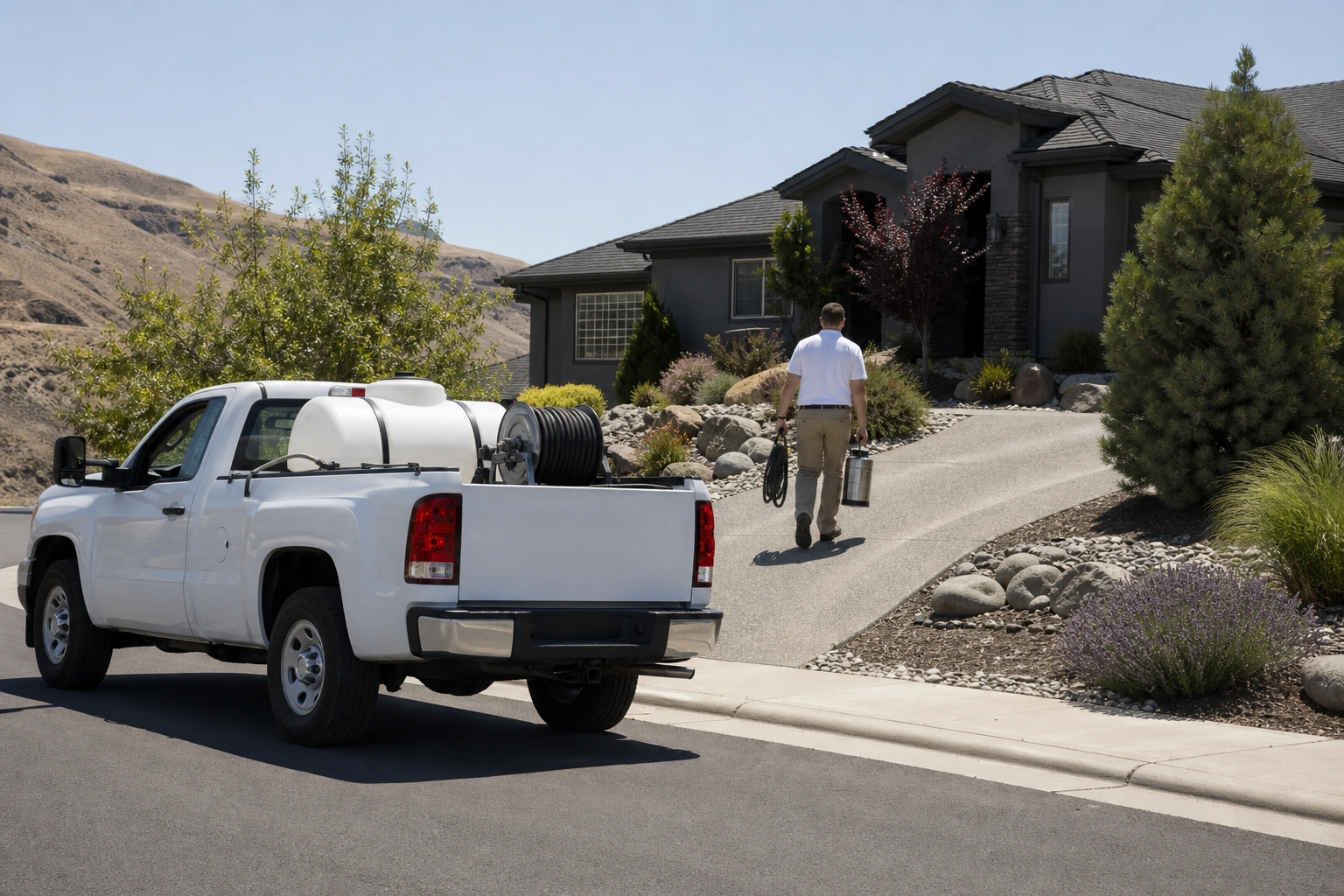
Plan on 45 minutes to an hour. You get a two-hour arrival window, the technician walks the property before treating anything, then treats the exterior perimeter, entry points, eaves and — if you want it — the interior. You'll get a summary of what was done afterward. You do not need to leave, and you don't need to clean first.
The seven steps of your first pest control visit in Kennewick
1. You pick a two-hour window
We book in two-hour arrival slots from 8am to 8pm, six days a week (we're closed Sundays). You'll know which technician is coming, and they call or text ahead. You don't have to burn a whole day waiting.
2. The walk-around comes before any treatment
This is the part that separates a real service from someone spraying a perimeter and leaving. The technician walks the whole property first: where the pressure is coming from, what species you actually have, where they're entering, and what's inviting them — the sprinkler hitting the siding, mulch piled against the foundation, the woodpile against the garage, the shrub touching the eave.
Correct identification happens here, and it changes everything downstream. Odorous house ants, pavement ants and carpenter ants get three different treatments; guessing wastes your season.
3. You'll get asked about your household
Pets, kids, anyone pregnant or chemically sensitive, the aquarium, the vegetable garden, where the children play. Say all of it — it shapes what's used and where. Full detail on that is in Is Pest Control Safe for Kids and Pets? 6 Facts.
4. Exterior first — that's where the problem lives
The foundation perimeter barrier, eave and web sweep (de-webbing), granular application in the yard where needed, and treatment of entry points: weep holes, utility penetrations, door sweeps, hose bibs, garage door corners. In this area, that exterior work carries most of the result, because irrigation pulls pests to your foundation line from dry surrounding ground.
5. Interior is targeted — and optional
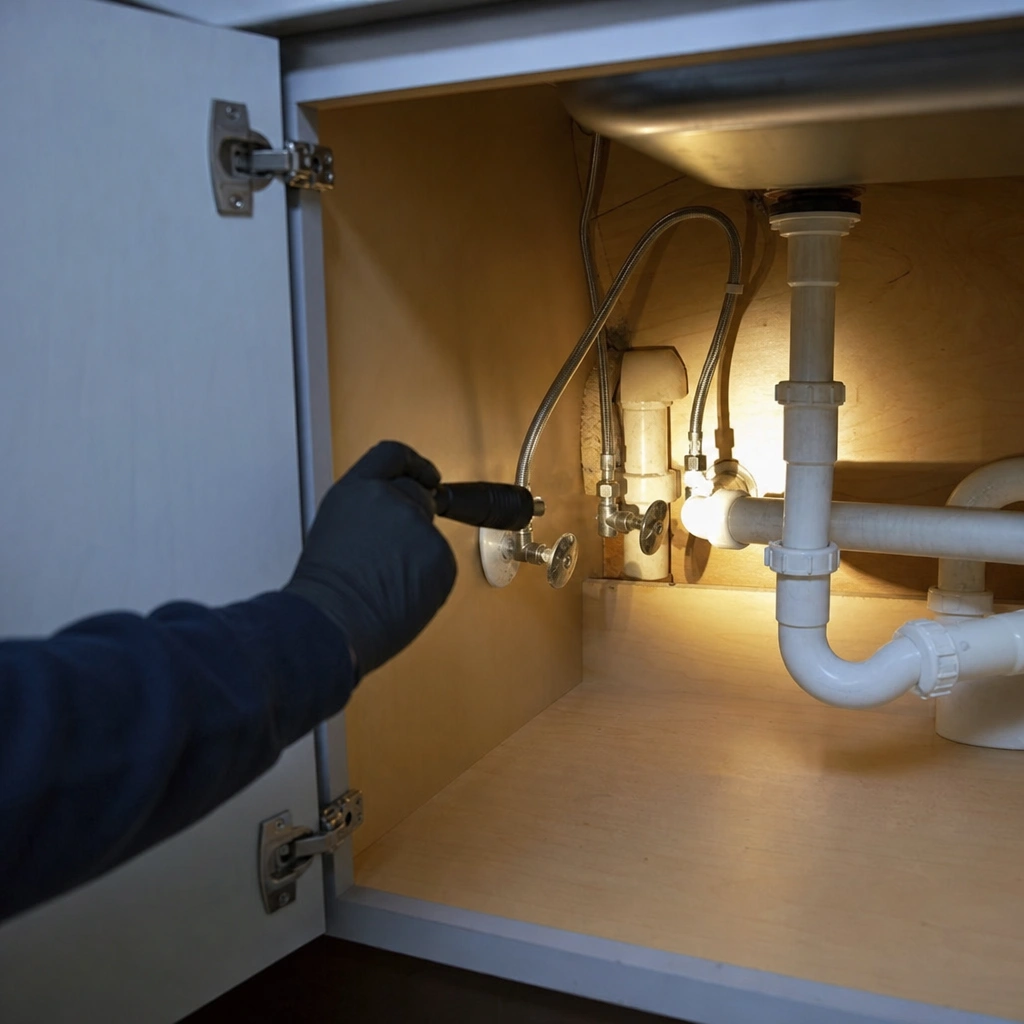
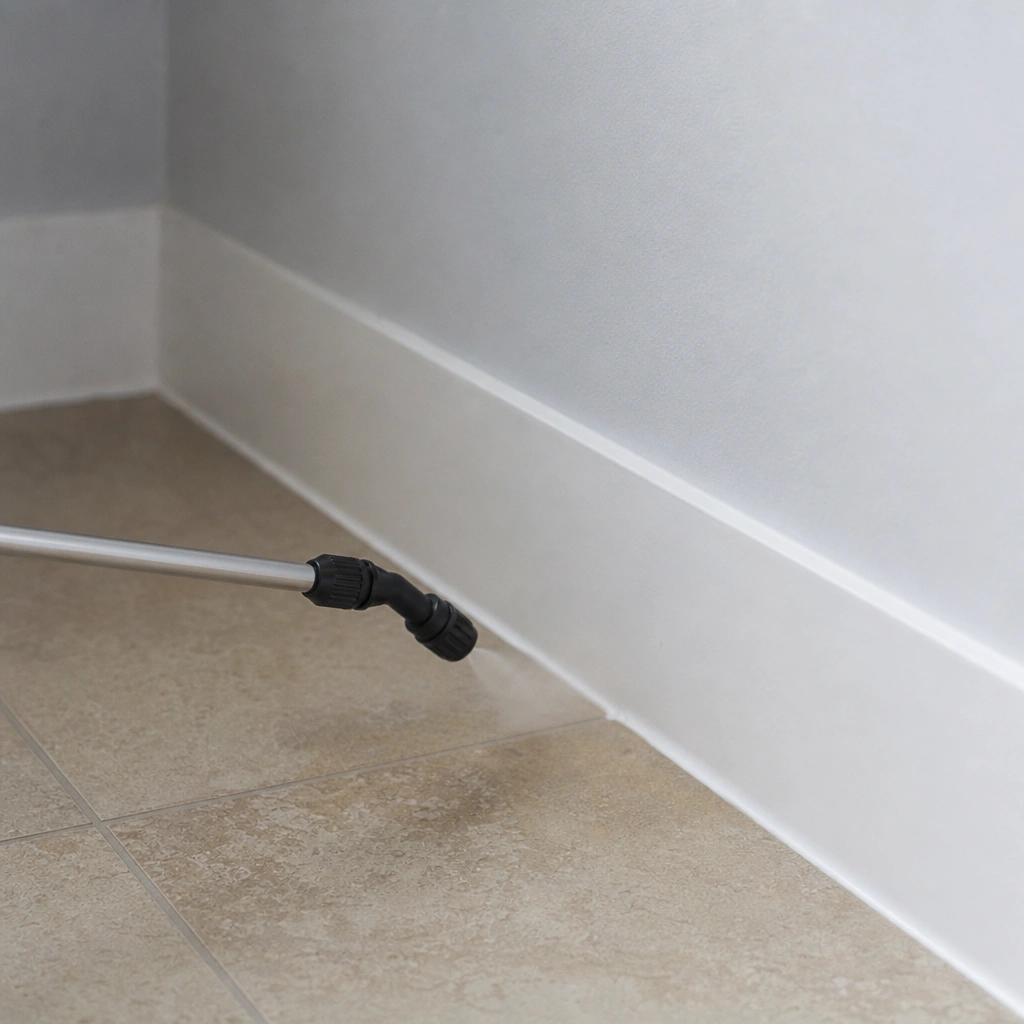
If you want interior treatment, it's cracks, crevices, voids, plumbing entries and the backs of cabinets, plus bait where ants are trailing. It isn't a blanket spray of your living space, and it's never required — plenty of our customers run exterior-only and do fine.
6. Photos and a written summary
The technician documents the visit and you get a summary afterward: what was treated, which pests were addressed, and anything they noticed that needs your attention — a failed door sweep, a sprinkler soaking the siding, a crawl space vent screen that's gone.
7. You'll see a few bugs for a week or two. That's it working.
This is the single most misunderstood part of a first service, so it's worth being blunt: activity often increases for a few days. Products push pests out of harborage, and ant bait has to be carried back and shared through the colony before anything dies. Expect 3–10 days for ants, a couple of weeks for a heavier problem. If activity hasn't clearly dropped after two weeks, that's what the free re-service is for — call us and we come back at no charge.
How to prepare for your first pest control visit in Kennewick
Very little, honestly:
Unlock the gate, and secure any dog that doesn't love strangers.
Move patio cushions, toys and stored items a few feet off the foundation line so we can reach it.
Clear under-sink cabinets if you want interior work there.
Cover the aquarium and turn off its pump.
Don't clean up ant trails on the morning of the visit. It feels wrong, but an active trail is a map straight to the nest — wiping it removes the most useful information we have.
Stop spraying store products at least a week out; residue interferes with the products that actually work.
Who's coming, and how you'll know
You'll be told which technician is assigned, and they call or text before they head over. Everyone on our crew is licensed through the Washington State Department of Agriculture, which is the licence any company in this state has to hold to apply pesticides commercially — you're entitled to ask to see it, and we're happy to show it.
We also try hard to send the same person back to the same property. It sounds like a small thing; it isn't. A technician who has been to your house before already knows the corner of the garage where the widows keep returning, that your neighbour's woodpile is the ant source, and which vent screen failed last spring. That's context you'd otherwise have to re-explain four times a year.
What the visit doesn't include
Worth being straight about the boundaries, because the industry is not always clear on them:
Structural repairs. We'll seal small accessible gaps and screen a vent, but we're not replacing your garage door seal or rebuilding rotted trim. We'll tell you exactly what needs doing so you or a handyman can.
Bed bugs and termites. Both are specialist jobs with their own inspection and treatment process — not something folded into a routine service visit.
Wildlife. Raccoons, skunks, birds and bats are a different trade with different regulations.
Attic or crawl space clean-outs. Rodent droppings in an enclosed space need proper containment and, in deer mouse country, specific precautions.
If your problem turns out to be one of these, we'll say so on the first visit rather than treating around it and charging you for a service that was never going to work.
Do you need to be home?
For exterior-only, no — as long as we can reach the perimeter and any gates are unlocked. For interior work, someone needs to let us in. Either way, we'd encourage being there for the first visit if you can, because the walk-around is when you'll learn the most about your own house.
What it costs
Your first visit is as low as $149 (against a standard one-time treatment price of $249), and ongoing plans run $59–109 a month depending on home size, with monthly, bi-monthly or quarterly treatment schedules. Every plan includes free re-service between visits, and we offer month-to-month with no contract if you'd rather not commit to a term.
Payment is due at the time of service. If you'd rather not put a card on file, the technician can collect cash or a check at the door — just tell us when you book.
Then what?
Your next visit gets scheduled on your chosen cadence, and the technician who knows your property comes back. Each visit builds on the last: what was applied, where activity was found, and which treatments are due — the crawl space dust that's twice-yearly, the webs that need knocking down between services.
Ready? Get a free quote in about two minutes, or call (509) 222-9828. We serve Kennewick, Pasco, Richland and West Richland, and we're the highest-rated pest control team in the Tri-Cities — a 5-star average across every review we've had.
How long does a first pest control visit in Kennewick take?
Usually 45 minutes to an hour for a typical home. Larger properties, crawl space work or a heavy infestation take longer, and the technician will tell you up front if that's the case.
Do I need to leave the house?
No. You just need to stay off interior treated surfaces until they're dry, about 1–2 hours. Most people carry on with their day.
Do I need to clean before pest control comes?
No. Clear access to the foundation outside and under-sink cabinets inside if you want them treated — that's it. And leave visible ant trails alone; they help us find the nest.
Why am I seeing more bugs after treatment?
Because it's working. Products push pests out of hiding, and bait has to travel through the colony before it takes effect. Expect a spike for a few days, then a sharp drop.
What if pests are still there in two weeks?
Call us and we re-treat at no charge. Free re-service between visits is part of every plan — that's the practical difference between professional service and a product off a shelf.
Do you have to treat inside my home?
No — interior treatment is optional. Exterior perimeter work handles most Tri-Cities pest pressure by itself.
Every company says they're licensed, thorough and guaranteed. Here are the nine questions that actually tell them apart — and the three answers that should end the call.
A failed health inspection costs more than a year of service. What commercial pest work covers by property type, how often it's needed, and what the documentation is really for.
September is the deadline, not the starting gun. Here's the checklist that keeps the autumn rodent wave outside, and the two jobs worth handing to a professional.