What ant control actually costs in the Tri-Cities, why our ants behave differently than the ones national websites describe, and the cases where a $12 bait station beats a professional visit.
· 8 min read
Nobody searches for ant control in Kennewick out of curiosity. You're reading this because there's a line of them along your kitchen counter, or coming out of a crack in the patio, and you want to know what it costs to make them stop. So here are the numbers first, before anything else.
The short answer
A standard one-time ant treatment in Kennewick averages $249 for a typical home, covering the interior, exterior and the full foundation perimeter. Your first visit on a protection plan is $149, and the plan then runs $59–109 a month depending on home size. If you've had ants for under a week and they're in one spot only, a $12 bait station may genuinely solve it — details below.
What ant control in Kennewick actually costs
Pricing in this trade is deliberately vague on most websites. Here's ours, plainly.
Option
Price
Best for
One-time ant treatment
$249 average
A single flare-up you want handled once
Home Pest Protection Plan
$149 first visit, then $59–109/mo by home size
Recurring ant pressure, which is most Tri-Cities homes
Re-service between visits
Free on the plan
Ants come back before your next scheduled visit
The honest math: if you pay $249 twice in one season — and with ants here, plenty of people do — you're past what the plan's first visit and several months of coverage would have cost. That's not a sales line, it's arithmetic. We're telling you because the alternative is you work it out later and feel taken.
Why the price doesn't change much by house size
Ant work is mostly perimeter work. Whether your home is 1,600 square feet near Zintel Canyon or 3,200 in Southridge, the technician walks the same foundation line, checks the same entry points, and treats the same trails. Square footage moves the recurring plan price because interior coverage scales — it barely moves a one-time ant visit.
What actually works here (and what doesn't)
This is where most national pest articles fall down, because they describe ants generally. The Tri-Cities has a specific ant situation.
The dominant nuisance ant in Kennewick homes is the odorous house ant — small, dark, and named for the faintly sour smell when crushed. It matters which species you have, because odorous house ants respond badly to the single most common homeowner mistake.
The spray-the-trail mistake
You see a line of ants. You spray the line with a contact killer from the hardware store. The ants die. You feel good. Two weeks later there are three trails instead of one.
Odorous house ant colonies practice something called budding: stress the colony with a repellent spray and it splits, sending satellite colonies to new nest sites. You didn't kill the colony, you reproduced it. This is the most common reason we get called to a home where someone has already "handled it."
What works instead is a non-repellent product or a slow-acting bait that workers carry back to the nest and share before anything dies. It feels slower — you'll still see ants for several days — and that delay is the point.
Where our ants actually come from
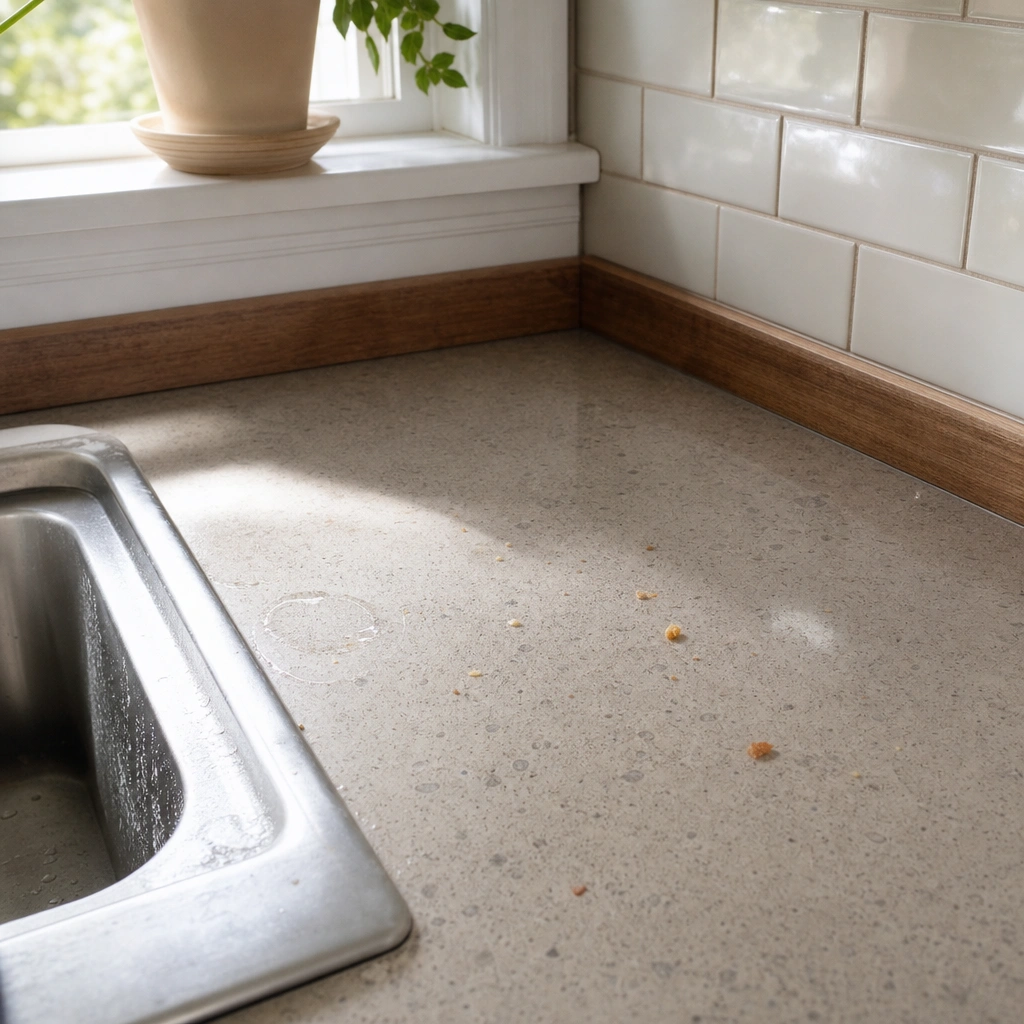
Kennewick sits in a desert. We get roughly seven to eight inches of rain a year, and summer afternoons over 100°F are ordinary. Ants are not coming into your kitchen because it's dirty. In July and August, they're coming in for water.
That's why the classic Tri-Cities ant call isn't the pantry — it's the dishwasher, the sink base cabinet, the bathroom, the water heater closet. If you've cleaned obsessively and still have ants, this is why. You don't have a hygiene problem, you have a humidity oasis in a desert.
The Kennewick seasonal calendar
Timing matters more than product choice, and our calendar is not the one you'll read on a national site.
Late March to April — soil warms, first foraging trails appear. The cheapest time to deal with ants, and the time almost nobody calls.
May through June — peak colony expansion, and our highest call volume of the year.
July to mid-August — the water surge. Interior calls climb even in spotless homes as outdoor moisture disappears.
September to October — foraging drops off as temperatures moderate. A good window for a preventive treatment.
November to February — colonies overwinter. Occasional indoor activity from nests already inside a wall void.
The practical takeaway: an April treatment costs the same as a July treatment and does considerably more, because you're hitting a small colony instead of a large one with satellites.
When you should skip hiring anyone
We'd rather tell you this than take $249 for work you don't need.
Handle it yourself if: you've seen ants for less than a week, they're on one trail in one room, you can see where they're entering, and there's an obvious food source. Buy gel bait or bait stations, place them on the trail rather than where it's convenient, and don't spray anything. Give it 7–10 days. This resolves a real share of minor cases and costs about twelve dollars.
Call someone if: you've already sprayed and the problem multiplied; you're seeing ants in more than one room; they're appearing in a bathroom or around plumbing; you find coarse sawdust-like shavings near wood (that's carpenter ants, a structural concern rather than a nuisance one); or you've baited properly for two weeks with no reduction.
Two local conditions do most of the work, and neither appears in generic advice.
Irrigation in a desert
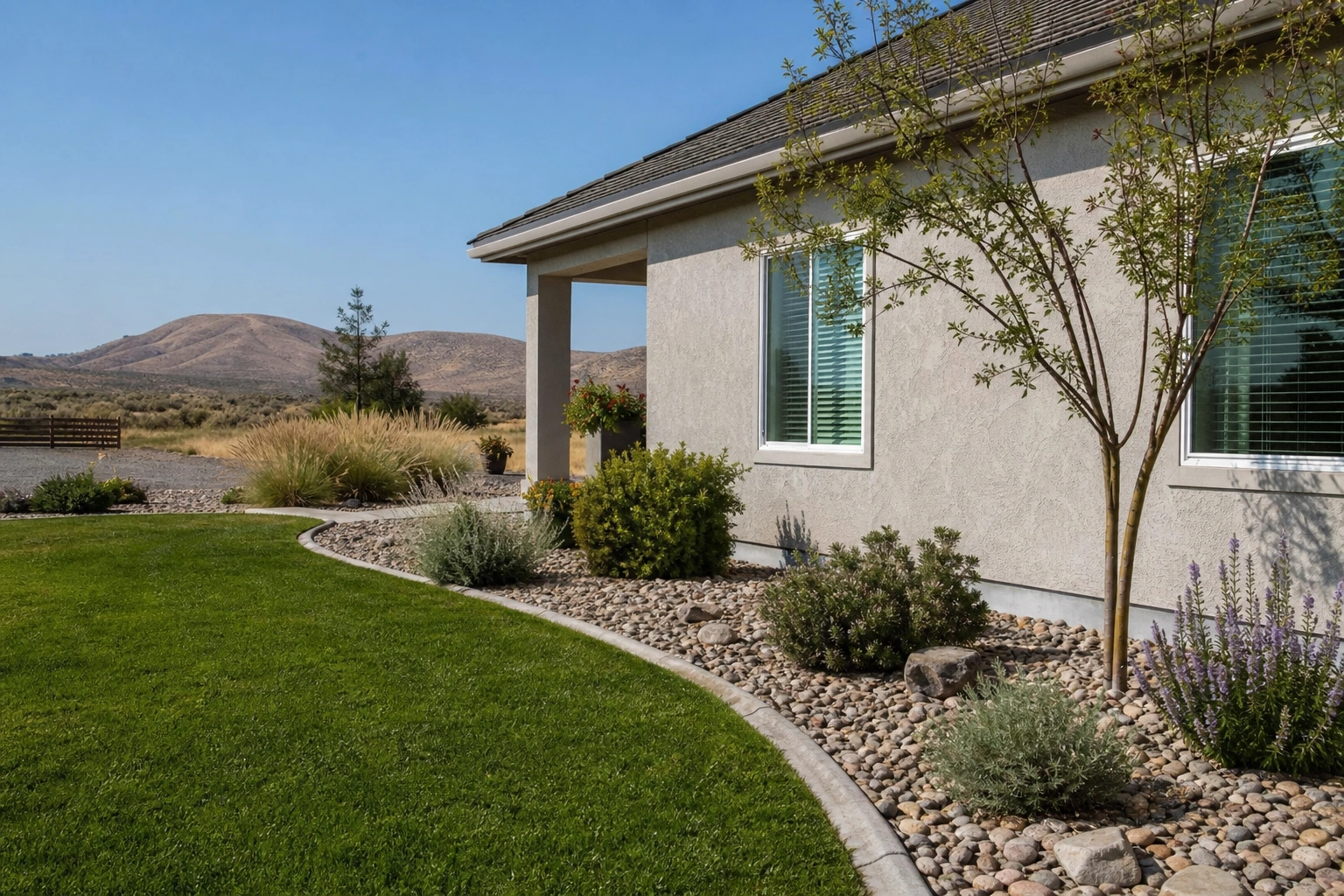
Every irrigated lawn in Kennewick, Pasco and Richland is an artificial wet zone in dry country. Ants concentrate along the edge where irrigated turf meets dry native ground — and that edge is usually your foundation. Overspray onto siding, a sprinkler head aimed at the house, or a flower bed watered daily against the foundation will out-produce any treatment we apply.
New construction on old farmland
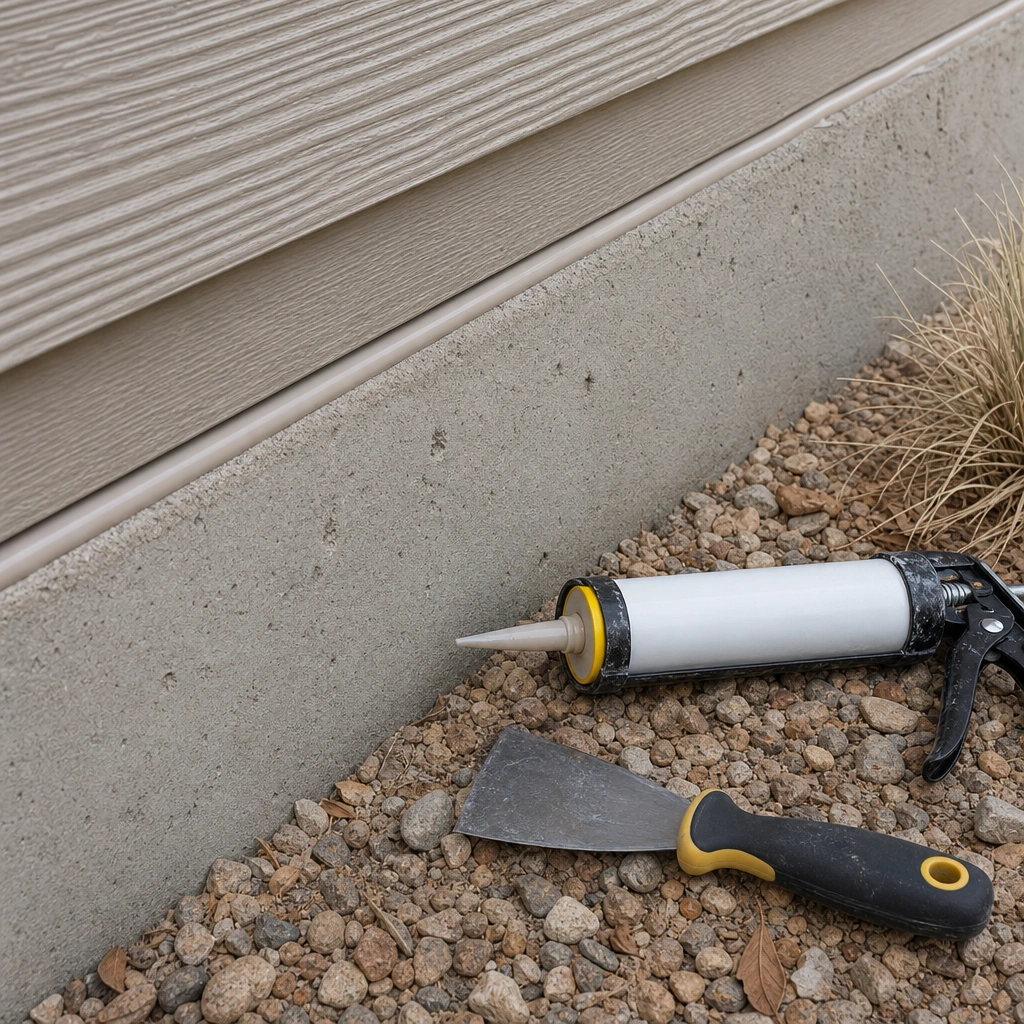
Much of the recent growth — Southridge, Badger Mountain South, the Road 68 and Broadmoor corridors in Pasco — sits on ground that was orchard, vineyard or field within living memory. Established ant populations don't leave when the houses arrive; they adapt to them. Newer homes also settle, opening hairline gaps at the sill plate in the first few years.
Older housing has the opposite problem. Richland's Hanford-era "alphabet houses" and mid-century central Kennewick homes often have crawl spaces, original wood trim and decades of settling. More entry points, but usually more stable populations. Different problem, different treatment plan.
What a professional visit actually involves
An ant service is not someone spraying baseboards for ten minutes.
Identification first. Odorous house ant, pavement ant and carpenter ant get different treatments. Guessing wastes your money.
Interior treatment targeted at trails, plumbing entries and voids — not a blanket spray of your living space.
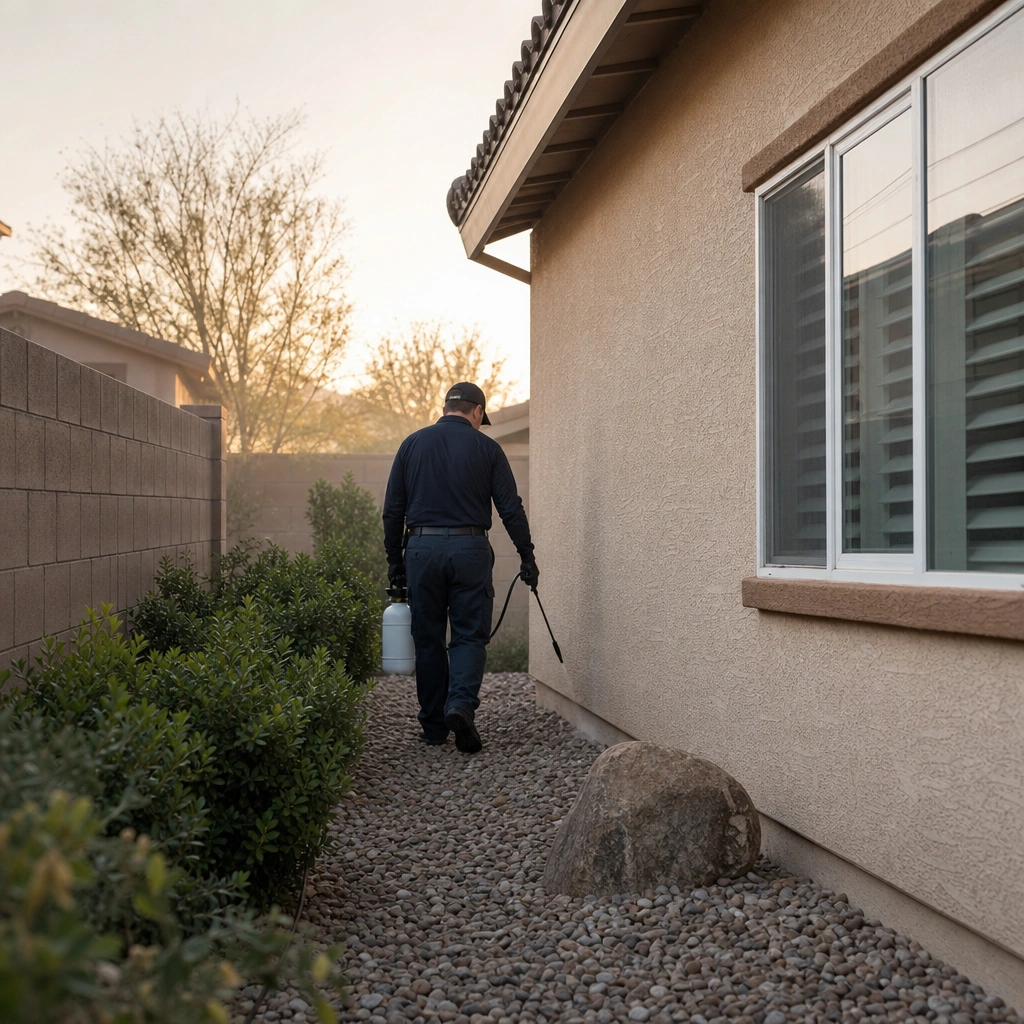
Exterior perimeter along the foundation, which is where the colony actually lives.
Conducive conditions — the sprinkler hitting your siding, the woodpile against the garage, the shrub touching the eave.
Budget 45 minutes to an hour for a typical home. Expect visible ant activity for 3–10 days afterward, and understand that's the bait working rather than failing.
Five things you can do this weekend for free
Turn any sprinkler head that hits your siding or foundation. Biggest single lever, costs nothing.
Pull mulch and soil back so there are a few inches of visible foundation.
Trim branches and shrubs touching the roof, eaves or walls — they're bridges.
Move firewood off the house and up off the ground.
Fix the slow leak under the sink. In a desert, a drip is a destination.
Whoever you hire for ant control in Kennewick, ask them to name the species before they quote you, ask what happens if ants return before the next visit, and ask whether the product is repellent or non-repellent. An operator who can't answer the third question comfortably is going to bud your colony.
We serve Kennewick, Pasco, Richland and West Richland. You can get a free quote online in about two minutes, or call (509) 222-9828 and describe what you're seeing — we'll tell you honestly if it sounds like something you can handle yourself.
What to do the week before your appointment
Nothing elaborate, but three things make a real difference to how well ant control in Kennewick works on the day.
Stop spraying. If you've been hitting trails with a contact killer, stop a week out. Repellent residue interferes with the bait and non-repellent products that actually work.
Leave the trails visible. It feels wrong, but an active trail is a map straight to the nest. Wiping every trail down the morning of the visit removes the most useful information available.
Clear access. Move stored items away from the garage perimeter and under-sink cabinets, and unlock the gate. Perimeter access is most of the job.
Frequently asked questions
How much is ant control in Kennewick?
A standard one-time treatment averages $249 for a typical home, covering interior, exterior and perimeter. The Home Pest Protection Plan is $149 for the first visit and then $59–109 per month depending on home size, which works out cheaper than paying one-time twice.
How long until the ants are gone?
Expect 3 to 10 days. Bait has to be carried back and shared through the colony before it works, so you'll see ants — sometimes more of them — for several days after treatment. Activity that hasn't clearly dropped after two weeks means it's time for a re-service.
Why do I have ants when my house is clean?
In Tri-Cities summers, ants come indoors looking for water, not food. That's why they show up under sinks, near dishwashers and in bathrooms of spotless homes. Cleaning harder won't fix it; addressing moisture and sealing entry points will.
Is one treatment enough?
For a small, early-season, single-trail problem, often yes. For an established colony in July, usually not — most need a follow-up two to three weeks later to catch the next wave of foragers.
Are ant treatments safe around kids and pets?
Modern products applied correctly are safe once dry, and most ant work is bait and targeted perimeter application rather than broad indoor spraying. Tell your technician about pets, kids and anyone with sensitivities before the visit starts.
Should I spray the ants I see?
No. Contact sprays kill visible workers and stress the colony into splitting, which turns one trail into several. This is the most common way a small ant problem becomes a large one.
They don't bite, don't breed indoors and don't damage anything — and they're still the number one fall complaint here. The problem is that by the time you see them, the useful window has closed.
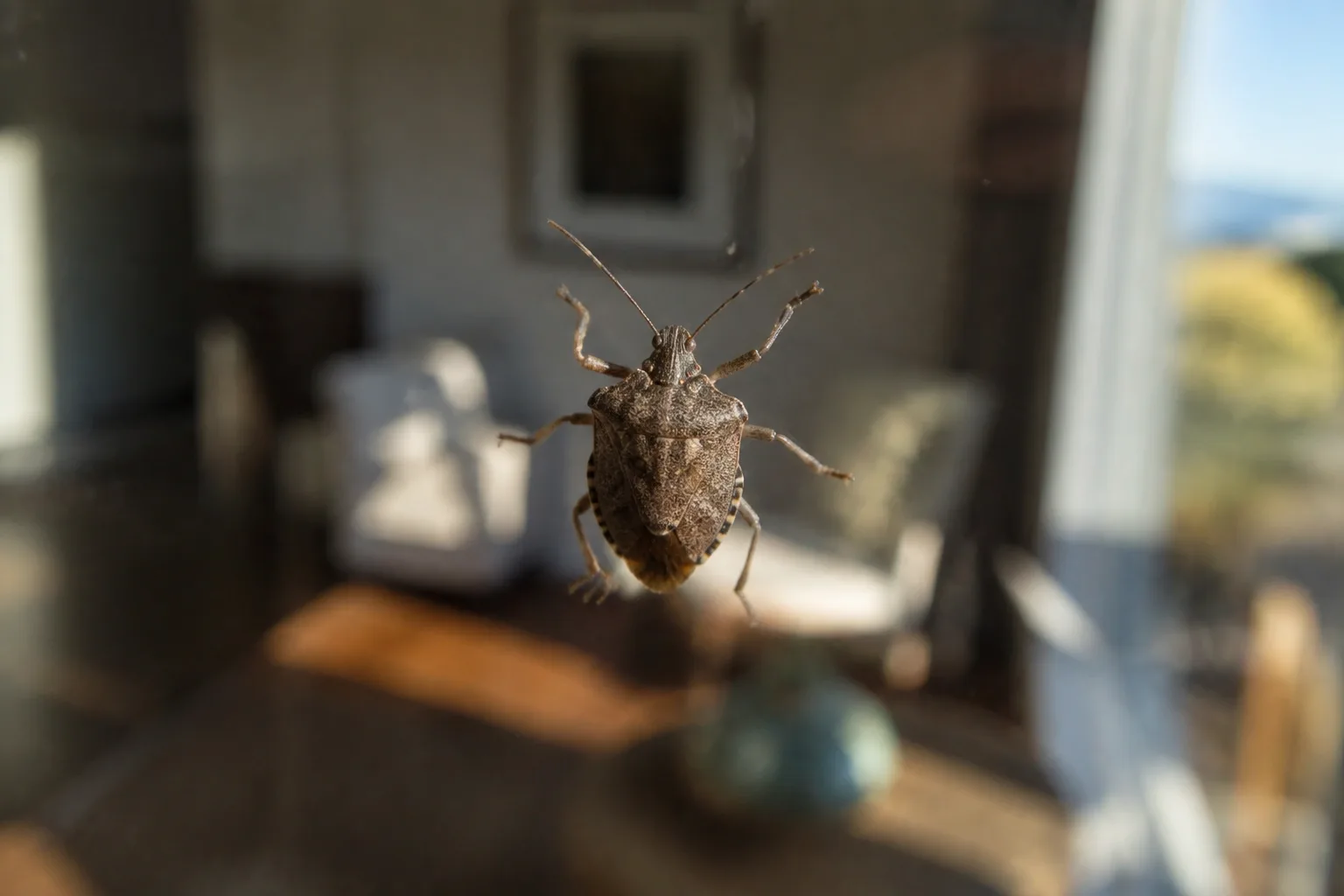
The shield-shaped ones on your window in October aren't native, they're an invasive orchard pest — and the reason they end up in your bedroom has nothing to do with your housekeeping.
The most common explanation for fall spiders is also wrong, and it leads people to the wrong fix. Here's what's actually happening in September and October, and what changes it.